


Help your child learn spoken English with simple conversations, fun activities, pronunciation tips, vocabulary building, and daily practice. A complete beginner’s guide for parents and teachers.
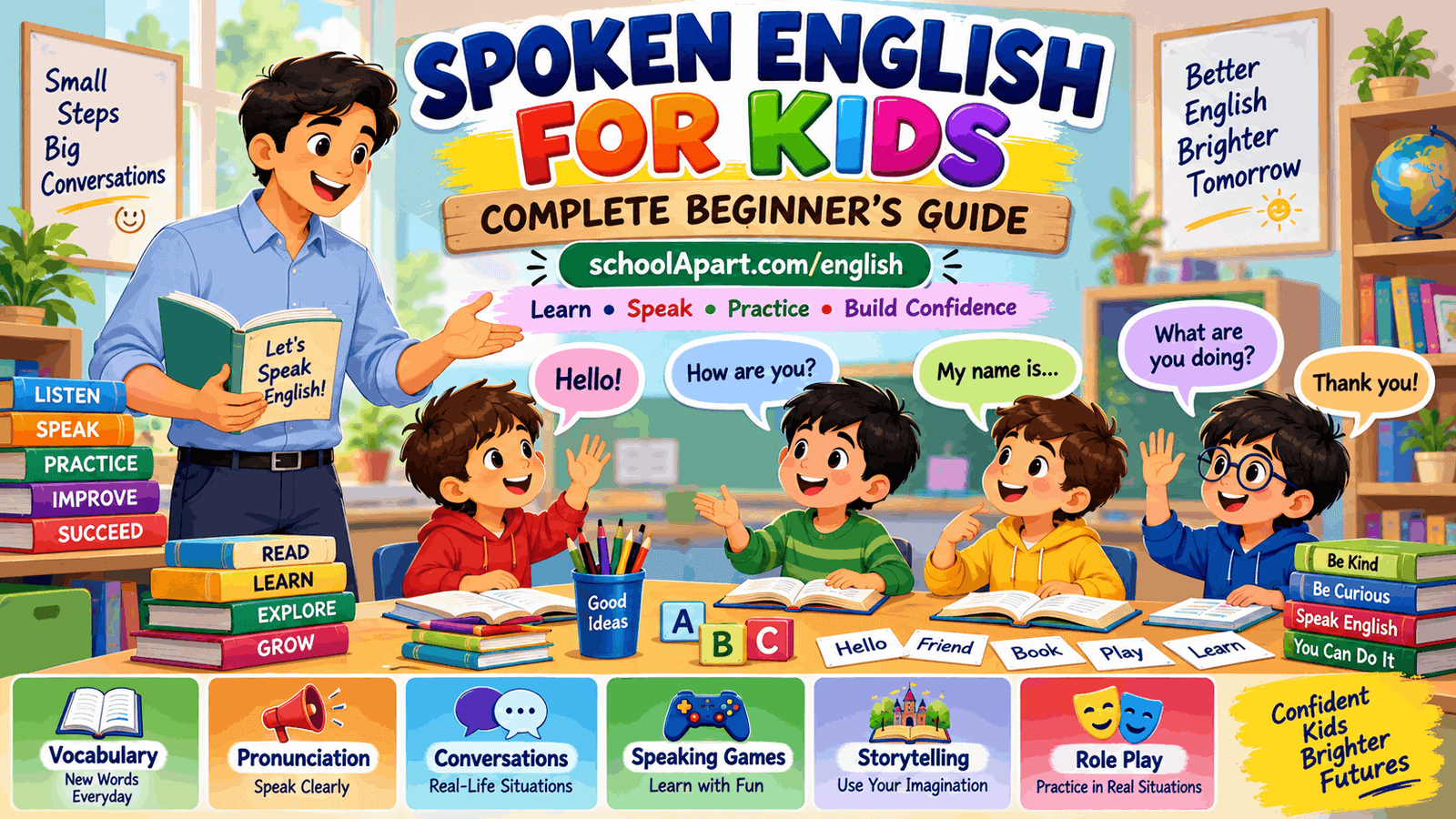
Spoken English for Kids: Complete Beginner’s Guide
Learning English is no longer just about passing school exams. In today’s connected world, the ability to communicate confidently in English has become one of the most valuable life skills for children.
Whether a child wants to participate in classroom discussions, make new friends, join competitions, or prepare for future academic and career opportunities, spoken English plays an important role in building confidence and communication skills.
Many parents believe that children must first master grammar before they can start speaking English. In reality, language learning works in the opposite way. Children naturally learn to speak by listening, observing, repeating, and practicing. Grammar comes gradually as they continue using the language.
The good news is that every child can learn spoken English. They do not need expensive courses or hours of daily study. With the right environment, simple conversations, enjoyable activities, and regular practice, children can become confident English speakers step by step.
This comprehensive guide explains everything parents and teachers need to know about helping children develop spoken English skills from the very beginning.
Table of Contents
- What Is Spoken English?
- Why Spoken English Is Important for Kids
- Best Age to Start Learning Spoken English
- Benefits of Learning Spoken English Early
- Common Myths About Spoken English
- How Children Naturally Learn a Language
- Essential Skills Needed for Spoken English
- Creating an English Learning Environment at Home
- Daily Spoken English Practice Routine
- Easy English Conversations for Kids
- Vocabulary Building Activities
- Pronunciation Tips
- Speaking Games and Fun Activities
- Role Play Ideas
- Mistakes Parents Should Avoid
- Recommended Learning Resources
- Frequently Asked Questions
What Is Spoken English?
Spoken English is the ability to communicate ideas, feelings, opinions, and information by speaking in English.
Unlike grammar exercises or written exams, spoken English focuses on real-life communication. It helps children understand others and express themselves clearly in different situations.
For example, children use spoken English when they:
- Introduce themselves
- Answer questions in class
- Talk with teachers
- Speak with friends
- Ask for help
- Describe objects
- Share stories
- Express feelings
Speaking is one of the four essential language skills.
- Listening
- Speaking
- Reading
- Writing
Among these, listening and speaking develop first. Reading and writing become easier once children are comfortable understanding and speaking the language.
Why Is Spoken English Important for Kids?
Children who develop spoken English skills early often become more confident learners. They are better prepared for classroom communication and future opportunities.
Here are some of the biggest benefits.
1. Builds Self-Confidence
Many children understand English but hesitate to speak because they fear making mistakes.
Regular speaking practice helps children overcome this fear.
When they successfully communicate even using simple sentences, they begin to believe in themselves.
Confidence developed through spoken English often improves participation in:
- Classroom discussions
- School assemblies
- Competitions
- Group activities
- Presentations
2. Improves Communication Skills
Communication is much more than speaking correct English.
Children also learn how to:
- Listen carefully
- Ask meaningful questions
- Express ideas clearly
- Respond politely
- Maintain conversations
These communication skills remain valuable throughout life.
3. Expands Vocabulary Naturally
Instead of memorizing hundreds of isolated words, children learn vocabulary in meaningful situations.
For example, while discussing food, they naturally learn words like:
- Apple
- Banana
- Rice
- Bread
- Milk
- Water
- Juice
- Breakfast
- Dinner
Because these words are connected to real conversations, children remember them more easily.
4. Makes School Learning Easier
Many schools now encourage interactive learning.
Students are expected to:
- Answer questions aloud
- Read stories
- Participate in discussions
- Explain their ideas
- Give short presentations
Children with better spoken English usually feel more comfortable participating in these classroom activities.
5. Develops Better Listening Skills
Speaking and listening always grow together.
As children practice conversations, they become better at understanding:
- Instructions
- Stories
- Classroom discussions
- Educational videos
- Teacher explanations
Strong listening skills improve learning across all subjects.
6. Encourages Creative Thinking
Speaking requires children to organize their thoughts before expressing them.
Activities like storytelling, role play, and picture description encourage imagination and creativity.
Instead of giving one-word answers, children begin forming complete ideas.
7. Prepares Children for the Future
English is widely used in:
- Higher education
- Science
- Technology
- Business
- Travel
- International communication
Developing spoken English from childhood creates a strong foundation for lifelong learning.
What Is the Best Age to Start Learning Spoken English?
Parents often ask,
“When should my child start learning spoken English?”
The answer is simple:
The earlier, the better.
Children learn languages naturally during their early years because their brains are highly receptive to sounds, words, and communication patterns.
Age-wise recommendations:
Nursery (3–4 Years)
Focus on:
- Listening
- Rhymes
- Greetings
- Simple words
- Songs
LKG & UKG (4–6 Years)
Introduce:
- Easy conversations
- Colours
- Numbers
- Animals
- Family members
- Daily objects
Learning should happen through games and activities.
Class 1–2
Children can begin:
- Self-introduction
- Daily conversations
- Question-answer practice
- Story listening
- Picture speaking
Class 3–5
Children can gradually develop:
- Longer conversations
- Storytelling
- Role play
- Public speaking
- Group discussions
- Short presentations
At every stage, the focus should remain on communication rather than perfection.
Common Myths About Spoken English
Many parents unknowingly delay their child’s language development because of common misconceptions.
Let’s clear up some of them.
Myth 1: Children Must Learn Grammar First
Reality:
Children learn language by using it.
Grammar becomes meaningful after children begin speaking naturally.
Myth 2: Only English-Medium Students Can Speak Good English
Reality:
Children from any educational background can become confident English speakers through regular practice.
Consistency matters more than the school medium.
Myth 3: Speaking English at Home Is Difficult
Reality:
Parents do not need to speak perfect English.
Using a few simple English sentences every day creates a powerful learning environment.
For example:
- Good morning.
- Please sit down.
- Come here.
- Thank you.
- Well done.
Small daily conversations make a big difference.
Myth 4: Mistakes Are Bad
Reality:
Mistakes are a natural part of language learning.
Every mistake helps children improve.
Instead of correcting every sentence immediately, encourage children to continue speaking.
Confidence should always come before perfection.
How Children Naturally Learn a Language
Understanding how children learn language helps parents teach more effectively.
Most children develop spoken language in this order:
Step 1 – Listening
Children hear words repeatedly.
↓
Step 2 – Understanding
They begin understanding meanings.
↓
Step 3 – Speaking
They start using simple words and short sentences.
↓
Step 4 – Reading
They recognize written words.
↓
Step 5 – Writing
Finally, they begin writing independently.
This natural sequence explains why listening and speaking should always come before advanced grammar exercises.
Essential Skills Every Child Needs for Spoken English
Speaking English confidently is not about memorizing hundreds of grammar rules. It is about developing several language skills together.
Here are the most important skills children should practice.
1. Listening Skills
Listening is the foundation of speaking.
Before children can speak English, they need to hear English regularly.
Encourage children to listen to:
- Simple English conversations
- Nursery rhymes
- Short stories
- Audiobooks
- Educational cartoons
- Children’s podcasts
The more children listen, the more naturally they understand pronunciation, sentence patterns, and vocabulary.
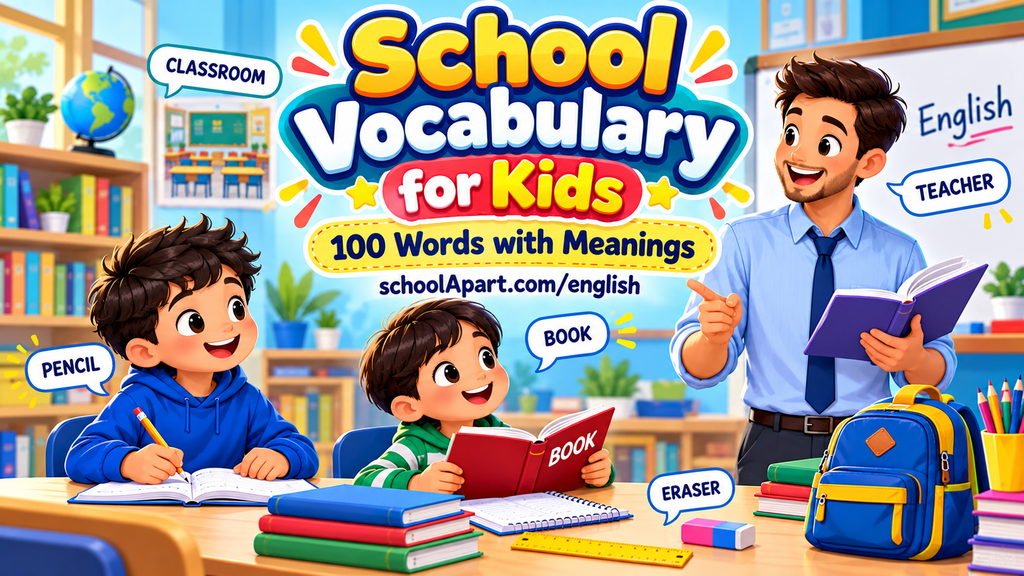
2. Vocabulary Building
Children cannot speak if they do not know enough words.
Instead of asking them to memorize long vocabulary lists, teach useful words they can use every day.
Start with categories such as:
Family
- Father
- Mother
- Brother
- Sister
- Grandfather
- Grandmother
School
- Book
- Pencil
- Teacher
- Classroom
- Bag
- Notebook
Food
- Apple
- Rice
- Bread
- Milk
- Juice
- Banana
Nature
- Tree
- Flower
- River
- Sky
- Sun
- Rain
Learning words in categories makes them easier to remember.
3. Sentence Formation
Children should gradually move from speaking single words to complete sentences.
Instead of:
Apple
Teach:
I like apples.
Instead of:
School
Teach:
I go to school every day.
Simple complete sentences build confidence much faster than isolated words.
4. Pronunciation
Correct pronunciation helps children communicate clearly.
Children do not need a foreign accent.
Instead, they should focus on:
- Speaking clearly
- Saying complete words
- Speaking slowly
- Listening carefully before repeating
Regular practice naturally improves pronunciation.
5. Confidence
Many children know English but hesitate to speak.
Parents and teachers should praise effort instead of expecting perfect English.
Confidence grows when children:
- Speak regularly
- Receive encouragement
- Are allowed to make mistakes
- Enjoy learning
Creating an English Learning Environment at Home
Children learn languages best when English becomes part of their daily routine.
Parents do not need to speak perfect English.
Even simple conversations can make a big difference.
Use Simple Greetings
Every morning, encourage greetings like:
- Good morning.
- Good afternoon.
- Good evening.
- Good night.
Use Daily Classroom Instructions
Try simple instructions such as:
- Come here.
- Sit down.
- Stand up.
- Open your book.
- Close the door.
- Wash your hands.
- Eat your breakfast.
- Drink your water.
- Finish your homework.
Children quickly begin understanding these everyday expressions.
Encourage Questions
Instead of giving instructions all the time, ask questions.
Examples:
What is your name?
How are you today?
What did you eat?
Which game do you like?
What colour is your bag?
Simple conversations encourage natural speaking.
Daily Spoken English Practice Routine
Children learn better through consistency than long study sessions.
A simple daily routine can make a huge difference.
Morning (5 Minutes)
Practice greetings.
Example:
Good morning.
How are you?
I am fine.
Today’s weather is sunny.
Afternoon (10 Minutes)
Learn:
- Five new words
- Two simple sentences
Example:
Word:
Butterfly
Sentence:
I saw a butterfly.
Evening (10 Minutes)
Talk about the day.
Examples:
What did you learn today?
Who was your best friend today?
What game did you play?
This improves thinking and speaking together.
50 Daily English Sentences for Kids
These simple sentences help children communicate in everyday situations.
Greetings
- Good morning.
- Good afternoon.
- Good evening.
- Good night.
- How are you?
Introducing Yourself
- My name is Rahul.
- I am seven years old.
- I study in Class Two.
- I live in Kolkata.
- Nice to meet you.
At Home
- I am hungry.
- I am thirsty.
- Please give me water.
- Thank you.
- You are welcome.
At School
- May I come in?
- May I go out?
- May I drink water?
- Please help me.
- I have finished my work.
Daily Conversation
- What is your name?
- Where do you live?
- What is this?
- It is my book.
- This is my pencil.
Talking About Yourself
- I like reading.
- I like drawing.
- I love football.
- My favourite colour is blue.
- My favourite fruit is mango.
Classroom
- Please repeat.
- I don’t understand.
- I understand.
- Listen carefully.
- Speak slowly.
Friends
- Let’s play together.
- Can I help you?
- Thank you, friend.
- You are very kind.
- See you tomorrow.
Everyday Life
- I am happy today.
- I am tired.
- I am ready.
- It is raining.
- Today is Monday.
- I love my family.
- I enjoy my school.
- Have a nice day.
- See you soon.
- Goodbye.
Practice only five new sentences each day instead of trying to memorize all fifty at once.
Easy English Conversations for Kids
Conversation 1: Greeting
A: Good morning.
B: Good morning.
A: How are you?
B: I am fine. Thank you.
A: Have a nice day.
B: You too.
Conversation 2: At School
Teacher: What is your name?
Student: My name is Riya.
Teacher: Which class do you study in?
Student: I study in Class Three.
Teacher: Very good.
Conversation 3: At Home
Mother: What are you doing?
Child: I am reading a storybook.
Mother: That’s wonderful.
Vocabulary Building Activities
Children remember words better when learning is enjoyable.
Picture Vocabulary
Show a picture and ask children to name:
- Animals
- Fruits
- Vegetables
- Colours
- Vehicles
Word of the Day
Introduce one new English word every day.
Example:
Word: Curious
Meaning:
Wanting to know or learn something.
Sentence:
I am curious about space.
Label Household Objects
Place labels on everyday objects.
Examples:
Door
Chair
Table
Mirror
Window
Children begin recognizing these words naturally.
Fun Speaking Activities
1. Picture Description
Show a colourful picture.
Ask:
What do you see?
Children should describe everything they notice.
2. Storytelling
Read a short story.
Ask children to retell it using their own words.
3. Show and Tell
Children bring a favourite toy or book.
They explain:
- What it is
- Why they like it
- Who gave it to them
4. One-Minute Speaking
Give a simple topic.
Examples:
My School
My Mother
My Favourite Animal
My Best Friend
Children speak for one minute.
5. Guess the Object
One child describes an object.
Others guess the answer.
This activity improves vocabulary and speaking together.
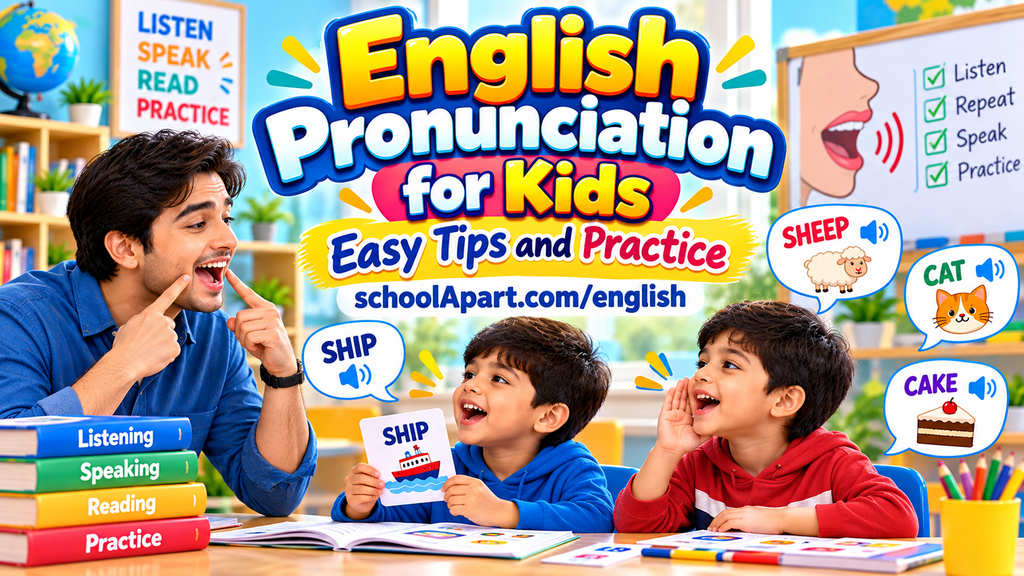
Pronunciation Tips
Clear pronunciation develops gradually.
Parents should encourage children to:
- Listen carefully
- Repeat slowly
- Speak clearly
- Read aloud every day
- Practice difficult words regularly
Avoid forcing children to copy a particular accent.
Clear communication is more important than sounding like a native speaker.
Role Play Activities
Role play makes speaking natural.
Ideas include:
- Teacher and Student
- Doctor and Patient
- Shopkeeper and Customer
- Friends Meeting
- Birthday Party
- At the Zoo
- At the Library
- Buying Fruits
- Visiting Grandparents
- At the Playground
Children enjoy pretending while practicing English.
Common Mistakes Parents Should Avoid
Speaking only during study time
Use English naturally throughout the day.
Correcting every sentence immediately
Allow children to finish speaking first.
Correct gently afterward.
Comparing children
Every child learns at a different pace.
Encourage progress instead of comparison.
Expecting fluency too quickly
Language learning takes time.
Celebrate small improvements every week.
Focusing only on grammar
Speaking comes first.
Grammar develops gradually through practice.
Tips for Teachers
Teachers can make spoken English classes more engaging by:
- Encouraging every child to speak
- Using games instead of lectures
- Organizing pair conversations
- Conducting storytelling sessions
- Using flashcards and pictures
- Praising effort and participation
- Giving every child equal speaking opportunities
A positive classroom environment motivates children to communicate without fear.
Spoken English is a life skill that opens doors to better communication, learning, and future opportunities. Children do not become confident speakers by memorizing grammar rules—they become confident by listening, speaking, practicing, and enjoying the language every day.
Whether at home or in the classroom, small daily conversations, fun games, storytelling, role-play, and positive encouragement can make English learning natural and enjoyable.
Remember, the goal is not perfect English from the very beginning. The goal is to help children communicate with confidence. Every new word, every simple sentence, and every conversation brings them one step closer to becoming fluent English speakers.
Frequently Asked Questions (FAQ)
1. What is Spoken English for Kids?
Spoken English for Kids is the process of helping children communicate confidently in English through listening, speaking, daily conversations, fun activities, games, and regular practice. The focus is on building communication skills rather than memorizing grammar rules.
2. What is the best age to start learning spoken English?
Children can start learning spoken English as early as 3 to 4 years old. Nursery, LKG, and UKG are ideal stages to introduce simple English words, songs, greetings, and short conversations. Learning should always be fun, interactive, and pressure-free.
3. How can my child learn English speaking at home?
Parents can support English learning by:
- Speaking simple English sentences every day
- Reading English storybooks together
- Watching educational English videos
- Playing vocabulary and speaking games
- Encouraging children to answer simple questions in English
- Appreciating every effort, even when mistakes happen
Even 10–15 minutes of daily practice can make a significant difference over time.
4. Does my child need to learn grammar before speaking English?
No.
Children naturally learn to speak first and understand grammar gradually. Instead of focusing on grammar rules from the beginning, encourage listening, repeating, and using simple English in everyday conversations.
5. How much English speaking practice should children do every day?
A daily routine of 10 to 20 minutes is enough for young learners.
A balanced practice schedule may include:
- 5 minutes of listening
- 5 minutes of vocabulary
- 5–10 minutes of speaking practice
Regular practice is much more effective than occasional long study sessions.
6. My child understands English but doesn’t speak. What should I do?
This is completely normal.
Many children experience a “silent period” where they understand more than they can express.
Instead of forcing them to speak:
- Ask simple questions.
- Use picture-based conversations.
- Play role-play games.
- Encourage storytelling.
- Praise every attempt.
Confidence develops gradually through consistent encouragement.
7. What are the best spoken English activities for kids?
Some highly effective activities include:
- Picture description
- Storytelling
- Show and Tell
- Role-play conversations
- Guess the Object
- Vocabulary games
- One-minute speaking challenges
- Flashcard activities
- English songs and rhymes
These activities make language learning enjoyable while improving communication skills.
8. How can pronunciation be improved?
Children can improve pronunciation by:
- Listening carefully to native or clear English speakers
- Repeating words and sentences aloud
- Reading simple books aloud every day
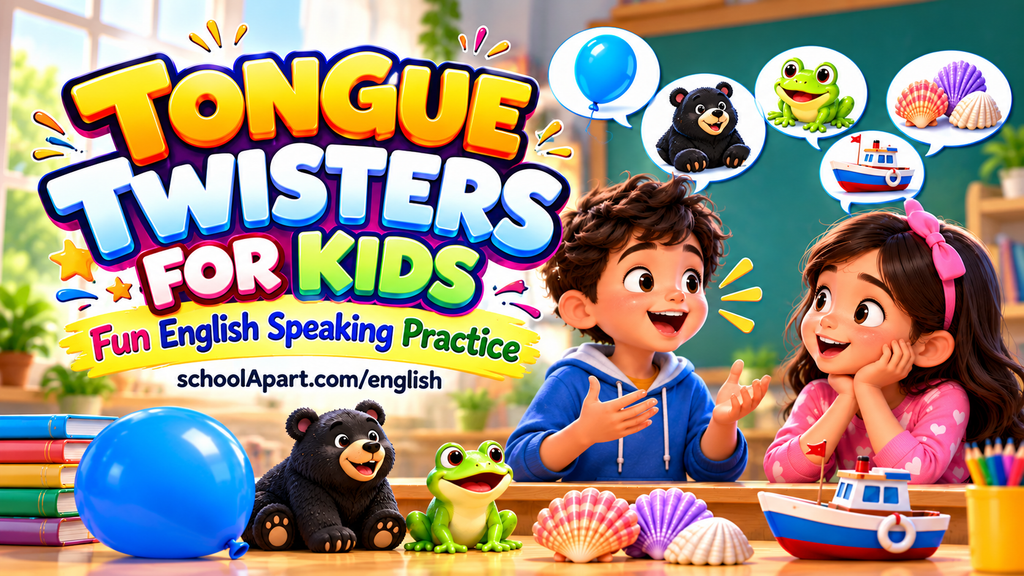
- Practicing tongue twisters
- Learning one new word with correct pronunciation each day
Clear pronunciation is more important than copying a particular accent.
9. How long does it take for a child to speak English confidently?
Every child learns at a different pace.
With regular daily practice, many children begin using simple English conversations confidently within a few months. Long-term fluency develops through continuous exposure and speaking opportunities.
10. Can children learn spoken English without joining coaching classes?
Yes.
Parents and teachers can build excellent spoken English skills through daily conversations, reading, games, storytelling, and consistent practice at home or in school.
The most important ingredients are:
- Daily exposure
- Regular speaking opportunities
- Positive encouragement
- Patience
Key Takeaways
- Spoken English is a communication skill that develops through daily use.
- Listening always comes before speaking.
- Young children learn best through games, stories, conversations, and activities.
- Confidence is more important than perfect grammar.
- Parents and teachers play a vital role by creating a supportive English-speaking environment.
- Consistency is the key to long-term improvement.
- Every conversation helps children become better communicators.
Learning spoken English is a journey, not a race.
Children do not become confident speakers overnight. They improve through thousands of small conversations, everyday experiences, and positive encouragement from parents and teachers.
Instead of expecting perfect English, celebrate every new word learned, every sentence spoken, and every attempt made. When children enjoy using English without fear of making mistakes, they naturally become confident communicators.
Remember:
“The best way to learn spoken English is not by memorizing rules but by using English every single day.”
With patience, consistency, and the right learning environment, every child can develop strong spoken English and communication skills that will benefit them throughout their education and future career.


Leave a Reply