Explore simple yoga poses, beginner-friendly routines, and healthy daily habits for kids and school students with SchoolApart.
Yoga for Kids & Students: Poses & Routines
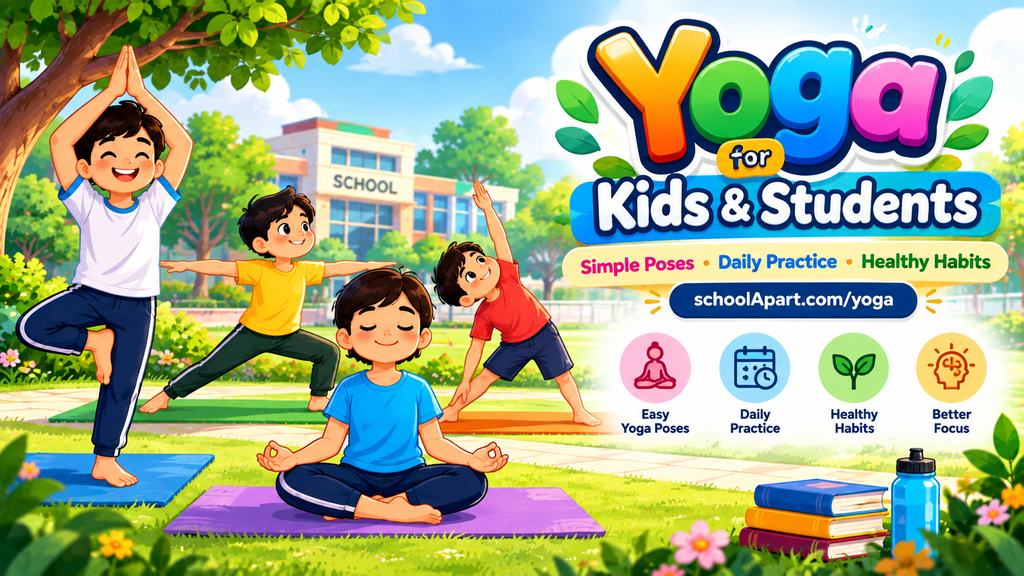
Welcome to SchoolApart Yoga, a learning space where kids and school students can explore simple yoga poses, beginner-friendly routines, and healthy daily habits.
Yoga can help children become more aware of their bodies, practise balance and flexibility, and make time for calm movement during their daily routines. Here, students can learn basic yoga poses step by step and discover simple ways to include age-appropriate yoga practice in their lives.
Whether you are a beginner, a school student, a parent, or a teacher, SchoolApart provides easy-to-understand yoga guides designed for young learners.
What Can You Learn About Yoga?
Explore the main areas of our Yoga learning hub.
1. Yoga Basics
Start with the basics and understand what yoga is, how beginners can get started, and how to approach yoga practice safely.
You will learn about:
- What yoga is and how beginners can approach it
- Yoga for kids and school students
- The importance of gentle movement and regular practice
- Basic safety tips for young learners
2. Easy Yoga Poses
Discover beginner-friendly yoga poses with simple, step-by-step instructions. Learn how to approach each pose with attention to posture, balance, and comfortable movement.
Topics include:
- Easy yoga poses for kids
- Standing yoga poses
- Sitting yoga poses
- Balance poses
- Simple stretching exercises
3. Yoga for School Students
School students can explore simple yoga activities that fit into their daily routines. The aim is to encourage movement, relaxation, body awareness, and healthy habits alongside schoolwork and other activities.
Learn about:
- Simple yoga routines for students
- Gentle movement breaks between study sessions
- Morning yoga ideas
- Relaxation exercises for beginners
- Building a regular practice habit
4. Daily Yoga Practice
A yoga routine does not need to be complicated. Beginners can start with a few simple movements and gradually build a comfortable routine with appropriate guidance.
Explore ideas such as:
- Five-minute yoga routines for kids
- Short morning yoga routines
- Simple daily practice plans
- Beginner-friendly yoga at home
Choose activities that suit the student’s age, ability, and comfort level. Consistency and safe practice are more important than attempting difficult poses.
Why Should Kids and Students Learn Yoga?
Yoga can introduce children to useful movement and self-care habits in an accessible way.
Body Awareness and Balance
Simple poses encourage children to notice their posture, movement, and balance while practising controlled movements.
Flexibility and Gentle Movement
Age-appropriate yoga poses and stretches can help children practise comfortable movement and flexibility without forcing their bodies into difficult positions.
Relaxation and Mindful Practice
Quiet, guided movement and gentle breathing exercises can give students an opportunity to slow down and relax.
Healthy Daily Habits
A short, regular practice can help students make movement part of their everyday routine alongside outdoor play, physical activity, adequate sleep, and other healthy habits.
Yoga is not a replacement for regular physical activity, medical care, or professional guidance when needed.
How Can Beginners Start Practising Yoga?
Children and students can begin with a simple, supervised approach.
- Choose a safe, uncluttered space with enough room to move.
- Wear comfortable clothing that allows free movement.
- Begin with easy, age-appropriate poses.
- Follow clear instructions from a qualified instructor or responsible adult.
- Move slowly and avoid forcing stretches or holding uncomfortable positions.
- Stop if a movement causes pain, dizziness, or discomfort.
Young children should practise under appropriate adult supervision. Students with injuries, health concerns, or physical limitations should seek suitable professional guidance before starting.
Yoga for Parents and Teachers
Parents and teachers can support children by introducing yoga as a simple learning activity rather than a competition. Encourage students to focus on comfortable movement, careful practice, and enjoyment instead of achieving perfect poses.
Short, supervised sessions with clear instructions can be more suitable for beginners than complicated routines. Always adapt activities to the children’s ages and abilities.
Frequently Asked Questions
What is yoga for kids?
Yoga for kids is an age-appropriate form of movement that introduces children to simple poses, balance, flexibility, body awareness, and relaxation.
Can school students start learning yoga at home?
Yes. Students can begin with simple, age-appropriate poses in a safe space, following reliable instructions and appropriate adult supervision.
How long should beginners practise yoga?
Beginners can start with a short session, such as five minutes, and adjust according to age, comfort, and guidance. There is no need to rush into longer or more difficult routines.
Is yoga suitable for every child?
Not every pose or activity is suitable for every child. Activities should match the child’s age, abilities, and health needs. Children should never be forced into a pose or encouraged to ignore pain.
What should children learn first?
Start with basic instructions, comfortable movement, simple standing and sitting poses, and easy balance activities. Difficult poses should not be a beginner’s priority.
Explore Yoga with SchoolApart
SchoolApart Yoga is dedicated to helping kids and school students learn simple yoga poses, practise gentle movement, and develop healthy daily habits.
Start with the basics, learn at a comfortable pace, and make safe practice part of a balanced routine.
Learn step by step. Practise safely. Build healthy habits.