
Explore easy science crafts for school students, including Solar System, Water Cycle, Plant Life Cycle, Food Chain, Weather and more.
Easy Science Crafts for School Students: Simple & Educational Ideas
Science becomes more interesting when students can make, see and explore what they are learning.
Science crafts are simple hands-on activities that combine science concepts with creative making. Unlike a large school science project, a science craft can be a small model, learning aid, paper activity, clay model or simple classroom craft that helps students understand a topic.
From the Solar System and planets to the water cycle, plant life cycle, food chain and human body, there are many science topics that can be turned into easy craft activities.
This guide shares easy science crafts for school students that can be made with simple materials and used for learning, classroom activities, school assignments and creative practice.
What Are Science Crafts?
Science crafts are hands-on craft activities based on science concepts.
For example:
- Making planets with paper or clay
- Creating a water cycle using cardboard and cotton
- Making a plant life cycle model
- Creating a food chain wheel
- Making a 3D cell model
- Building a simple learning chart
- Creating a weather craft
The main purpose is not simply to make something attractive. The craft should help the student understand or explain a science concept.
Why Are Science Crafts Useful for Students?
Science crafts can combine learning with creativity.
They can help students develop:
- Creativity
- Observation skills
- Fine motor skills
- Problem-solving
- Planning
- Model-making skills
- Scientific understanding
- Presentation skills
They can also make difficult concepts easier to remember because students are actively involved in creating something.
15 Easy Science Crafts for School Students
Here are some simple science craft ideas that students can try according to their age and school requirements.
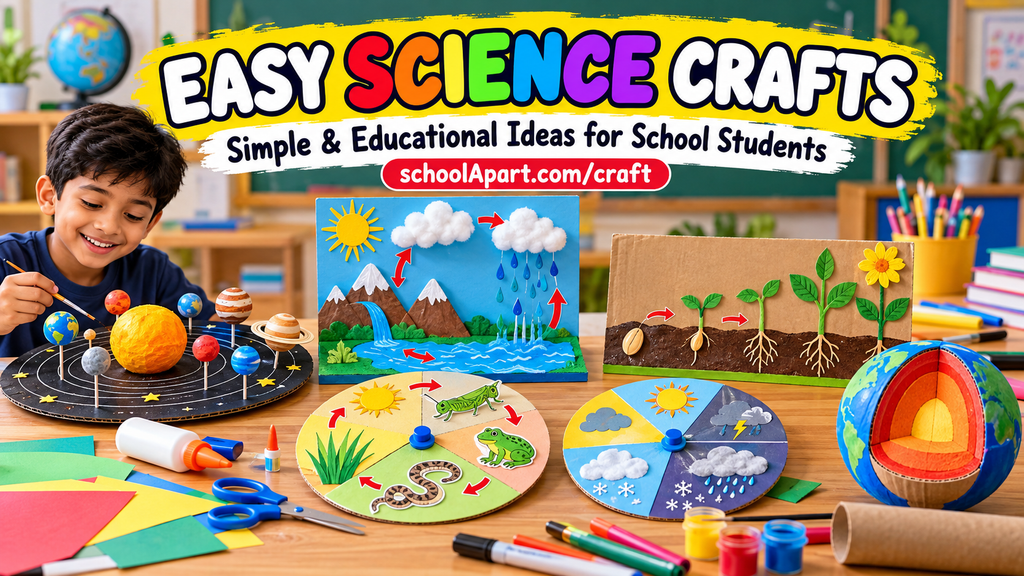
1. ☀️ Solar System Craft
A Solar System craft can help students learn the names and order of the planets.
Materials
- Black chart paper
- Coloured paper
- Small balls or clay
- Glue
- Markers
- Scissors
Students can create the Sun and eight planets and arrange them in their correct order.
Learning Focus
Mercury → Venus → Earth → Mars → Jupiter → Saturn → Uranus → Neptune
For a detailed school-project version, see our guide on How to Make a Solar System Model for a School Project.
2. 💧 Water Cycle Craft
Create a simple visual representation of the water cycle.
Show these stages:
Evaporation → Condensation → Precipitation → Collection
Materials
- Cardboard
- Blue paper
- Cotton
- Glue
- Markers
- Coloured paper
Cotton can be used for clouds and blue paper can represent water.
Learning Focus
Students can understand how water moves through different stages in nature.
3. 🌱 Plant Life Cycle Craft
This is a simple science craft for younger students.
Create four or five stages:
Seed → Germination → Seedling → Mature Plant → Flower/Fruit
Students can use paper, clay, real seeds or recycled materials.
Learning Focus
The craft helps students understand the basic stages of plant growth.
4. 🦋 Butterfly Life Cycle Craft
Make a circular or sequential display showing:
Egg → Caterpillar → Pupa → Butterfly
Materials
- Paper
- Cardboard
- Clay
- Colours
- Glue
Students can make each stage separately and arrange them around a circle.
This works well as a classroom learning craft.
5. 🍃 Food Chain Craft
A food chain can be turned into a simple paper strip, wheel or 3D model.
For example:
Grass → Grasshopper → Frog → Snake → Eagle
Use arrows to show the direction of the food relationship.
Materials
- Paper
- Cardboard
- Pictures or drawings
- Glue
- Markers
Learning Focus
Students can learn how organisms are connected within a food chain.
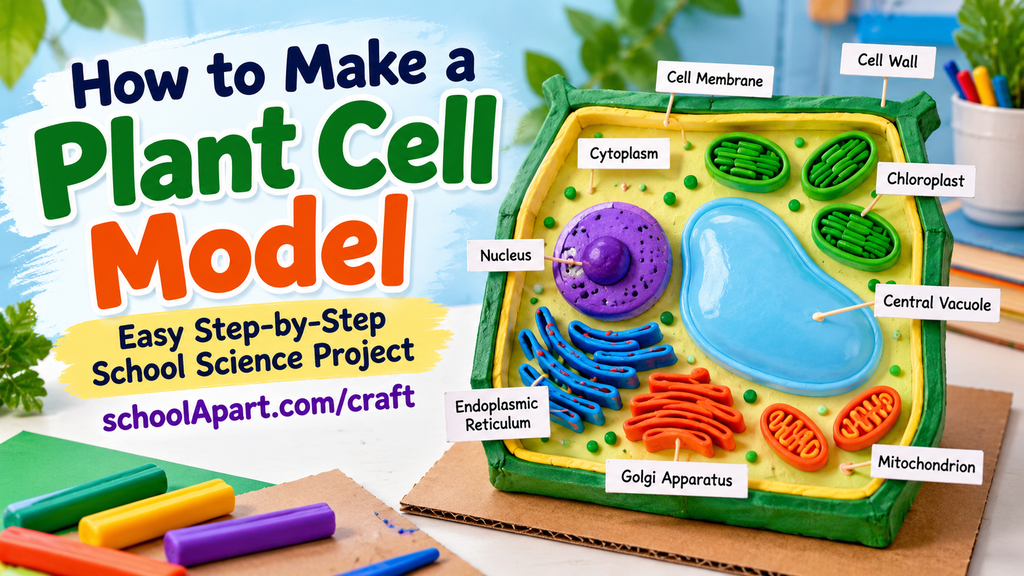
6. 🧫 Plant Cell Craft
A simple plant cell craft can make cell structures easier to identify.
Students can use:
- Clay
- Cardboard
- Coloured paper
- Foam
- Recycled materials
Label basic parts such as:
- Cell wall
- Cell membrane
- Nucleus
- Cytoplasm
- Chloroplast
- Vacuole
For younger students, fewer labels can be used.
7. 🔬 Animal Cell Craft
An animal cell can also be represented through a simple 2D or 3D craft.
Students can create different cell parts using clay or coloured paper.
Possible labels
- Cell membrane
- Nucleus
- Cytoplasm
- Mitochondria
- Golgi apparatus
- Endoplasmic reticulum
The complexity should depend on the student’s class level.
8. 🌧️ Rain Cloud and Rain Cycle Craft
Create a simple hanging cloud or paper model to explain rainfall.
Materials
- Cotton
- Blue paper
- Cardboard
- Thread
- Glue
Students can show water droplets falling from a cloud and connect the activity with the water cycle.
This is especially suitable for primary students.
9. 🌈 Rainbow Science Craft
A rainbow craft can be used to introduce the colours of visible light.
Students can create a rainbow using:
- Coloured paper
- Paint
- Cotton
- Cardboard
Learning Focus
Students can learn the sequence of the commonly taught rainbow colours and connect the craft with basic light concepts.
For a more advanced discussion, the teacher can explain that a rainbow forms when sunlight interacts with water droplets in the atmosphere.
10. 🌍 Earth Layers Craft
Create a cross-section of Earth using paper, clay or cardboard.
Show:
- Crust
- Mantle
- Outer core
- Inner core
Different colours can be used for each layer.
Learning Focus
The craft helps students visualize Earth’s internal structure.
11. 🌡️ Weather Wheel Craft
A weather wheel is a simple interactive learning craft.
Create a circular wheel showing different weather conditions:
- Sunny
- Cloudy
- Rainy
- Windy
- Stormy
Add a movable pointer in the centre.
Students can use the wheel to record or discuss daily weather.
12. 🌬️ Windmill Craft
A simple paper windmill can introduce students to the idea of wind movement and renewable energy.
Materials
- Square paper
- Pencil
- Scissors
- Pin
- Straw or stick
Learning Focus
Students can observe how moving air causes the blades to rotate.
For older students, the craft can be developed into a more detailed renewable-energy model.
13. 🧲 Magnetism Craft
Create a simple magnetism learning board.
Show examples of objects that are:
Magnetic
or
Non-magnetic
Students can draw or attach pictures of objects to the correct section.
Learning Focus
This activity introduces the basic idea that some materials are attracted to magnets while others are not.
14. 🫁 Human Respiratory System Craft
Students can create a simple labelled respiratory-system model.
Show:
- Nose
- Trachea
- Bronchi
- Lungs
- Diaphragm
Paper, cardboard, straws and balloons can be used for a simple representation.
For a more advanced working model, adult or teacher supervision is recommended.
15. ♻️ Recycling and Waste Segregation Craft
Create a simple waste-segregation learning board.
Show different types of waste and place them into suitable categories.
For example:
- Paper
- Plastic
- Food waste
- Metal
- Glass
The exact waste categories can be adapted to the system taught at the student’s school or locality.
Learning Focus
This craft connects science and environmental education with everyday life.
Science Crafts by School Level
Not every science craft is suitable for every age group.
🌱 Primary Students
Good choices include:
- Plant Life Cycle
- Butterfly Life Cycle
- Solar System
- Rainbow
- Weather Wheel
- Water Cycle
Keep the models simple, colourful and easy to explain.
📚 Middle School Students
Students can try:
- Plant Cell
- Animal Cell
- Earth Layers
- Food Chain
- Human Respiratory System
- Magnetism
- Renewable Energy
These can include more labels and scientific information.
🔬 Older School Students
Students can make more detailed models involving:
- Human body systems
- Cells
- Environmental science
- Renewable energy
- Water filtration
- Ecosystems
- Working science models
The project should always match the student’s class level and school instructions.
Materials You Can Use for Science Crafts
You do not need a large collection of expensive supplies.
Paper Materials
- Chart paper
- Coloured paper
- Cardboard
- Newspaper
- Paper cups
- Paper rolls
Modelling Materials
- Clay
- Modelling dough
- Cotton
- Foam sheets
Recycled Materials
- Old boxes
- Plastic bottles
- Bottle caps
- Ice cream sticks
- Used paper
Basic Tools
- Pencil
- Ruler
- Glue
- Scissors
- Markers
- Colours
- Paintbrush
You can often create useful science crafts by combining ordinary craft materials with recycled household items.
How to Make a Science Craft More Educational
A science craft should not be only decorative.
Here are some simple ways to make it more useful for learning.
Add labels
Label important parts clearly.
Use arrows
Arrows can show movement or a process.
Add short facts
One or two facts can make the model more informative.
Show a process
For topics such as the water cycle or life cycle, arrange the stages in the correct order.
Add a “How It Works” section
A small explanation can help the student explain the craft to a teacher or classmates.
Make it interactive
Wheels, movable arrows, flaps and rotating parts can make a learning craft more engaging.
Science Craft vs Science Project: What Is the Difference?
These two terms can overlap, but they are not always the same.
Science Craft
Usually focuses on simple, creative, hands-on learning.
Examples:
- Plant life cycle wheel
- Weather wheel
- Food chain craft
- Paper Solar System
- Rainbow craft
Science Project
Usually has a more specific school assignment or presentation purpose.
Examples:
- Solar System model
- Water cycle model
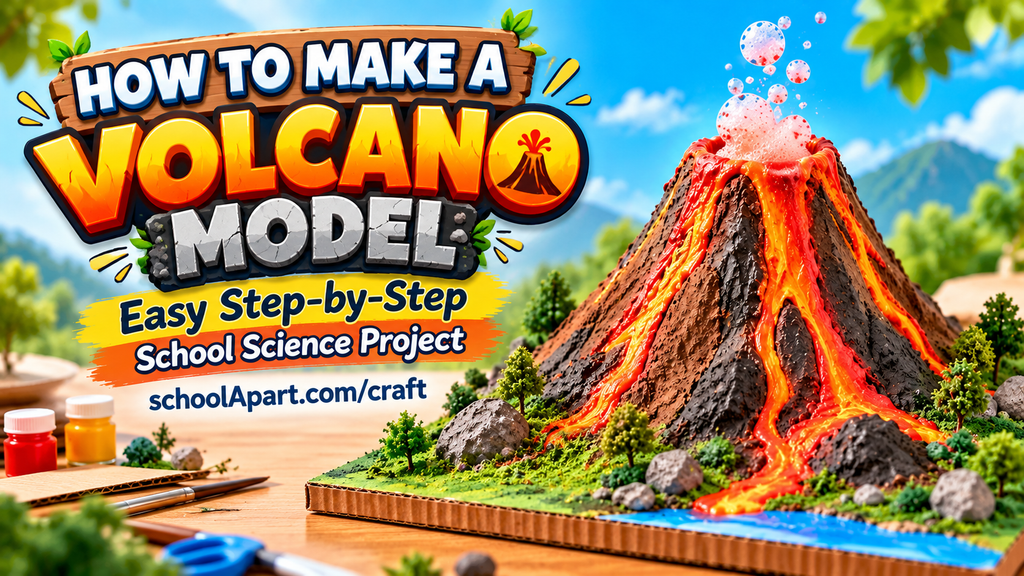
- Volcano model
- Rainwater harvesting model
- Water filtration model
A science craft can therefore become part of a school science project, but not every science craft needs to be a full project.
Tips for Making Science Crafts Successfully
1. Choose the right difficulty
Start with a project the student can realistically complete.
2. Understand the science
Before making the craft, learn what it represents.
3. Keep labels clear
Small or messy labels can make a good model difficult to understand.
4. Use safe materials
Choose materials appropriate for the student’s age.
5. Avoid unnecessary decoration
The science concept should remain the main focus.
6. Reuse materials when possible
Cardboard, paper and other reusable items can make excellent craft materials.
7. Make it yourself
Students learn more when they participate in making the craft rather than simply buying a ready-made model.
Simple Science Craft Presentation Format
If the craft is being used for a school activity, students can present it using this structure:
Title
↓
Science Topic
↓
Materials Used
↓
How I Made It
↓
What It Shows
↓
What I Learned
This simple format can make it easier for students to explain their work.
Science crafts for school students are a simple way to bring science learning and creativity together.
Students can turn topics such as the Solar System, Water Cycle, Plant Life Cycle, Food Chain, Earth Layers, Weather, Cells and Human Body into hands-on learning activities using paper, cardboard, clay and recycled materials.
The goal is not to make the most complicated craft. A good science craft should be simple enough to make, useful for learning and easy for the student to explain.
Start with a topic you are already learning at school, choose a suitable craft idea and build it step by step. As your skills improve, you can move from simple learning crafts to larger school science projects.
FAQ
1. What are science crafts for school students?
Science crafts are hands-on creative activities based on science topics. They can include paper crafts, clay models, learning wheels, charts and simple 3D models.
2. What are some easy science crafts for students?
Solar System crafts, Water Cycle crafts, Plant Life Cycle crafts, Butterfly Life Cycle crafts, Food Chain crafts and Weather Wheels are good beginner-friendly options.
3. What materials are needed for science crafts?
Common materials include paper, cardboard, clay, cotton, colours, glue, markers and recycled household materials.
4. Are science crafts the same as science projects?
Not always. Science crafts are generally smaller learning activities, while science projects may involve a more detailed model, experiment or school assignment.
5. Can science crafts be used for school projects?
Yes. A science craft can be used as part of a school project, classroom activity, assignment or exhibition.
6. Which science crafts are good for younger children?
Plant life cycle, butterfly life cycle, Solar System, rainbow, weather wheel and simple water cycle crafts are suitable starting points.
7. Can recycled materials be used for science crafts?
Yes. Cardboard boxes, used paper, paper rolls, bottle caps and other reusable materials can be used for many science crafts.
8. How can I make a science craft educational?
Add clear labels, arrows, short facts and a simple explanation of the scientific concept represented by the craft.
9. What is an easy science craft for a school classroom?
A weather wheel, food chain craft, plant life cycle, water cycle or recycling board can work well as a classroom learning activity.
10. Should students make science crafts themselves?
Yes. Making the craft themselves helps students practise creativity, planning, fine motor skills and understanding of the science topic.
Leave a Reply