

Discover the essential art supplies every beginner needs for drawing and painting. Learn about pencils, sketchbooks, paints, brushes, paper, canvases, and more in this complete beginner’s guide.
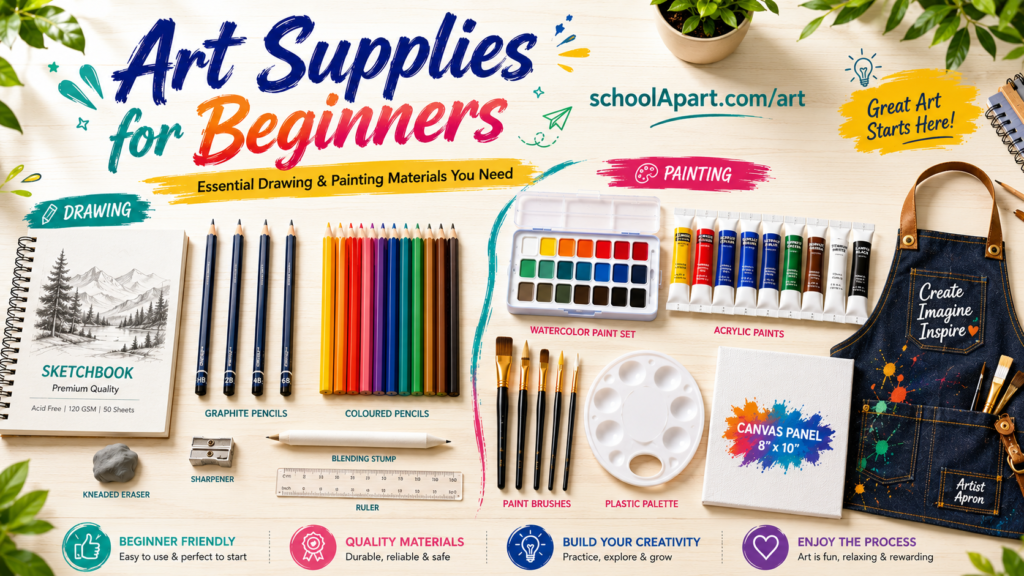
Art Supplies for Beginners: Essential Drawing & Painting Materials You Need
Starting your art journey is exciting, but it can also be confusing. Walk into an art store or browse online, and you’ll find hundreds of pencils, paints, brushes, sketchbooks, canvases, and accessories. Beginners often wonder:
- Which supplies do I really need?
- Should I buy expensive materials?
- What’s the difference between student-grade and professional-grade supplies?
- Can I start with a small budget?
The good news is that you don’t need a studio full of expensive equipment to create great artwork. Many professional artists began with just a pencil, an eraser, and a sketchbook.
This guide will help you understand the essential drawing and painting materials every beginner should own. You’ll also learn which supplies are worth buying first and which ones can wait until your skills improve.
Whether you’re a school student, hobby artist, or someone returning to art after many years, this guide will help you build your first art kit wisely.
Why Choosing the Right Art Supplies Matters
Many beginners believe better supplies automatically create better artwork.
That’s not true.
Quality tools can make drawing and painting more enjoyable, but practice and creativity are far more important than expensive materials.
Choosing the right beginner-friendly supplies helps you:
- Learn techniques more easily.
- Avoid unnecessary frustration.
- Save money.
- Build good artistic habits.
- Create cleaner, more consistent artwork.
Start simple, master the basics, and upgrade your supplies as your confidence grows.
Essential Drawing Supplies
Drawing is one of the easiest and most affordable ways to begin creating art.
A beginner drawing kit requires only a few basic tools.
Graphite Pencils
Graphite pencils are the most important drawing tool.
Different pencil grades create different line weights and shading effects.
Recommended Beginner Pencil Grades
| Pencil Grade | Best For |
|---|---|
| HB | Everyday sketching and writing |
| 2B | General drawing and outlines |
| 4B | Smooth shading |
| 6B | Dark shadows and dramatic contrast |
For most beginners, these four pencils are enough to complete hundreds of practice drawings.
Buying Tips
Choose pencils that:
- Produce smooth graphite.
- Sharpen easily.
- Don’t break frequently.
- Have comfortable wooden barrels.
Avoid buying extremely large pencil sets when you’re just starting. Learning to use a few pencil grades well is more valuable than owning dozens.
Mechanical Pencils
Mechanical pencils are popular for precise line work.
Advantages
- Consistent line width.
- No sharpening required.
- Excellent for technical drawing.
- Great for architecture and geometry.
Disadvantages
- Less suitable for expressive shading.
- Lead can break under heavy pressure.
Most beginners should learn with wooden graphite pencils first, then add a mechanical pencil later if needed.
Coloured Pencils
Coloured pencils allow artists to add vibrant colour while maintaining the control of drawing.
They’re ideal for:
- School projects
- Nature illustrations
- Cartoon characters
- Portraits
- Animal drawings
- Creative colouring
Beginner Tips
Start with a set of 12 or 24 colours.
Large sets are attractive, but beginners usually don’t need 72 or 120 colours immediately.
Charcoal Pencils
Charcoal creates rich black tones that are difficult to achieve with graphite.
Artists commonly use charcoal for:
- Portraits
- Figure drawing
- Dramatic shading
- Quick gesture sketches
Advantages
- Very dark values.
- Excellent for expressive artwork.
- Easy to blend.
Challenges
- Smudges easily.
- Requires careful handling.
- Can be messy.
For beginners, charcoal is an excellent tool after gaining confidence with graphite pencils.
Sketchbooks
A sketchbook is where every artist develops ideas and improves skills.
Professional artists often carry one everywhere they go.
Types of Sketchbooks
- Spiral-bound
- Hardcover
- Softcover
- Landscape
- Portrait
- Pocket-sized
Recommended Paper Weight
For pencil drawing:
120–160 GSM paper works well.
For mixed media:
Choose heavier paper.
Beginner Advice
Don’t wait for the “perfect” sketchbook.
Fill pages with practice, experiments, and mistakes.
A completed sketchbook teaches more than an empty expensive one.
Drawing Paper
Different drawing techniques require different paper surfaces.
Smooth Paper
Best for:
- Fine details
- Technical drawing
- Ink work
- Coloured pencils
Medium Texture Paper
Suitable for:
- General sketching
- Pencil drawing
- Beginner practice
Rough Paper
Works well for:
- Charcoal
- Pastels
- Expressive artwork
Choosing the correct paper helps your pencils perform better and makes shading easier.
Erasers
Every artist makes mistakes.
A good eraser helps correct them cleanly without damaging the paper.
Vinyl Eraser
Best for:
- Removing graphite.
- Clean corrections.
- School drawing.
Kneaded Eraser
Unlike traditional erasers, a kneaded eraser can be shaped by hand.
Artists use it to:
- Lift graphite gently.
- Create highlights.
- Blend subtle tones.
- Avoid damaging paper.
Many portrait artists consider a kneaded eraser an essential tool.
Precision Eraser
These narrow erasers are useful for:
- Tiny corrections.
- Hair details.
- Highlights in eyes.
- Fine line cleanup.
Pencil Sharpeners
Sharp pencils create cleaner drawings.
There are two main types.
Manual Sharpeners
Advantages:
- Affordable.
- Portable.
- Easy to carry.
Electric Sharpeners
Advantages:
- Faster sharpening.
- Consistent points.
- Convenient for classrooms and studios.
For beginners, a high-quality manual sharpener is usually all that’s needed.
Blending Tools
Blending creates smooth transitions between light and dark areas.
Common blending tools include:
- Blending stumps
- Tortillons
- Cotton swabs
- Tissue paper
- Soft cloth
Among these, blending stumps offer the greatest precision and are widely used in realistic pencil drawing.
Rulers and Geometry Tools
Although freehand drawing is important, measuring tools can improve accuracy.
Useful tools include:
- Ruler
- Compass
- Protractor
- Set squares
These are especially helpful for:
- Perspective drawing
- Technical illustrations
- Architectural sketches
- School assignments
A Basic Drawing Kit for Beginners
If you’re starting from scratch, you don’t need dozens of supplies.
A simple beginner kit can include:
- HB Pencil
- 2B Pencil
- 4B Pencil
- 6B Pencil
- Sketchbook
- Drawing paper
- Vinyl eraser
- Kneaded eraser
- Manual sharpener
- Blending stump
- 30 cm ruler
With these affordable tools, you’ll be able to practise sketching, shading, perspective, still life, portraits, cartoons, and many other drawing exercises.
Tips for Buying Your First Art Supplies
Before purchasing anything, keep these simple tips in mind:
- Buy only what you need.
- Choose quality over quantity.
- Start with student-grade supplies.
- Avoid oversized beginner kits packed with unnecessary tools.
- Read reviews before purchasing online.
- Invest in a durable sketchbook—you’ll use it more than any other item.
- Replace supplies gradually as they wear out.
Building your collection slowly allows you to discover which tools best match your artistic style while staying within your budget.
Essential Painting Supplies
Once you’ve learned the basics of drawing, painting is the next exciting step. Unlike drawing, painting requires a few additional materials, but you don’t need to buy everything at once.
A beginner painting kit should be simple, practical, and affordable.
Paint Types for Beginners
There are several kinds of paints available. Each has unique characteristics and is suitable for different styles of artwork.
Watercolor Paints
Watercolor is one of the best choices for beginners.
Advantages
- Easy to carry
- Affordable
- Easy to clean with water
- Great for school projects
- Transparent and beautiful effects
Best For
- Landscapes
- Flowers
- Nature painting
- Greeting cards
- Travel sketchbooks
Beginner Tip
Choose a basic set of 12 or 24 colours. Learn colour mixing before investing in larger sets.
Acrylic Paints
Acrylic paints are one of the most versatile painting mediums.
Advantages
- Bright colours
- Dries quickly
- Easy to layer
- Can be used on many surfaces
- Water-based while wet
Best For
- Canvas painting
- Home décor
- Posters
- Crafts
- Modern artwork
Beginner Tip
Start with a basic set that includes primary colours, black, and white. You can mix many additional colours yourself.
Oil Paints
Oil painting is loved by many professional artists because of its rich colours and smooth blending.
Advantages
- Long drying time
- Excellent blending
- Rich colour depth
- Professional finish
Challenges
- Slower drying
- Requires additional mediums or solvents
- More expensive
- Brushes need extra cleaning
Best For
- Portraits
- Fine art
- Realistic painting
- Traditional artwork
Most beginners should start with watercolor or acrylic before moving to oil paints.
Poster Colours
Poster colours are commonly used in schools.
Advantages
- Bright colours
- Affordable
- Easy to use
- Good coverage
Best For
- School assignments
- Posters
- Children’s artwork
- Craft activities
Paint Brushes
Brushes are just as important as paints. Different brush shapes create different effects.
Round Brush
Best for:
- Details
- Thin lines
- Flowers
- Small areas
Flat Brush
Best for:
- Large areas
- Backgrounds
- Straight strokes
- Blocking in colour
Filbert Brush
A filbert brush has a rounded edge.
Ideal for:
- Blending
- Portraits
- Soft edges
- Natural shapes
Fan Brush
Used for creating texture.
Commonly used for:
- Grass
- Trees
- Hair
- Clouds
- Foliage
Detail Brush
Perfect for:
- Tiny highlights
- Fine outlines
- Eyes
- Small decorative elements
Recommended Beginner Brush Sizes
A beginner doesn’t need dozens of brushes.
A practical starter set includes:
- Round #2
- Round #6
- Flat #6
- Flat #12
- Filbert #8
- Detail #1
This small collection is enough for most beginner projects.
Brush Hair Types
Brushes are generally made from:
Synthetic Hair
Advantages:
- Affordable
- Durable
- Easy to clean
- Suitable for watercolor and acrylic
Recommended for beginners.
Natural Hair
Advantages:
- Holds more paint
- Smooth application
- Preferred by many professionals
More expensive than synthetic brushes.
Painting Paper
Different paints require different types of paper.
Watercolor Paper
Recommended weight:
- 300 GSM
It absorbs water well and resists warping.
Mixed Media Paper
Suitable for:
- Watercolor
- Ink
- Coloured pencils
- Light acrylic
Ideal for students who enjoy experimenting.
Acrylic Paper
Designed to handle thicker paint and repeated layering.
Canvas
Canvas is the most popular surface for acrylic and oil painting.
Common types include:
Stretched Canvas
Ready to paint immediately.
Ideal for:
- Acrylic
- Oil
- Home display
Canvas Panels
Less expensive than stretched canvas.
Excellent for beginners who want to practice without spending much.
Canvas Pads
Contain multiple canvas sheets.
Perfect for:
- Daily practice
- Classroom exercises
- Art workshops
Palettes
A palette is where artists mix colours before applying them to their artwork.
Common options include:
- Plastic palette
- Wooden palette
- Ceramic palette
- Disposable paper palette
- Glass palette
For beginners, a white plastic palette is affordable, lightweight, and easy to clean.
Palette Knives
Palette knives aren’t only for mixing paint.
Artists also use them to:
- Create texture
- Spread thick paint
- Produce modern painting effects
While not essential for beginners, they’re fun to explore as your skills grow.
Water Containers
For watercolor and acrylic painting, keep two containers nearby.
One for:
- Rinsing dirty brushes
Another for:
- Clean water
This helps colours stay bright and prevents muddy mixtures.
Easels
An easel supports your paper or canvas while you paint.
Table Easel
Ideal for:
- Students
- Small workspaces
- Home practice
Standing Easel
Suitable for:
- Larger paintings
- Studios
- Professional artists
Portable Easel
Great for:
- Outdoor painting
- Nature studies
- Travel
Beginners can comfortably start without an easel by using a flat table, then upgrade later if needed.
Aprons and Protective Materials
Painting can become messy.
Useful protective items include:
- Artist apron
- Old shirt
- Table cover
- Paper towels
- Cleaning cloth
Protecting your workspace makes cleanup much easier.
Storage and Organization
Taking care of your art supplies extends their lifespan.
Simple storage tips:
- Store pencils horizontally or in a pencil case.
- Wash brushes immediately after use.
- Keep paints tightly sealed.
- Store paper flat in a dry place.
- Keep canvases away from moisture.
- Organize small tools in containers or drawers.
Good organization saves time and protects your investment.
Student Grade vs Professional Grade Supplies
Many brands offer both student-grade and professional-grade products.
| Feature | Student Grade | Professional Grade |
|---|---|---|
| Price | Lower | Higher |
| Pigment Quality | Good | Excellent |
| Colour Intensity | Moderate | Rich |
| Durability | Good | Excellent |
| Best For | Beginners & students | Experienced artists |
For most beginners, student-grade supplies provide excellent value and are more than capable of producing beautiful artwork.
Budget Buying Guide
You don’t need to spend a fortune to get started.
Basic Budget Kit
Includes:
- Graphite pencils
- Sketchbook
- Eraser
- Sharpener
- Watercolor set
- 3–5 brushes
- Plastic palette
Perfect for school students and hobby artists.
Intermediate Kit
Adds:
- Acrylic paints
- Better sketchbook
- Canvas panels
- Kneaded eraser
- Blending stump
- Brush roll
Suitable for artists who practice regularly.
Advanced Kit
May include:
- Professional paints
- Premium brushes
- Easel
- Canvas collection
- Palette knives
- Brush cleaner
- Storage box
Upgrade gradually as your skills and artistic needs grow.
Common Mistakes When Buying Art Supplies
Many beginners spend more money than necessary.
Avoid these common mistakes:
Buying the Largest Kit
Large sets often contain colours and tools you’ll rarely use at first.
Choosing the Cheapest Products
Very low-quality supplies can make learning frustrating.
Aim for reliable student-grade materials instead.
Ignoring Paper Quality
Even excellent pencils perform poorly on unsuitable paper.
Choose paper designed for your preferred medium.
Buying Too Many Brushes
A few good brushes are more useful than dozens of poor-quality ones.
Skipping Basic Tools
Simple items like an eraser, sharpener, palette, or blending stump are often more valuable than expensive extras.
Beginner Art Supplies Checklist
Use this checklist when building your first art kit. You don’t need everything on day one—start with the essentials and expand your collection as your skills improve.
Essential Drawing Kit
☐ HB Pencil
☐ 2B Pencil
☐ 4B Pencil
☐ 6B Pencil
☐ Sketchbook
☐ Drawing Paper
☐ Vinyl Eraser
☐ Kneaded Eraser
☐ Manual Sharpener
☐ Blending Stump
☐ 30 cm Ruler
Essential Painting Kit
☐ Watercolor Paint Set
☐ Acrylic Paint Set (Optional for Beginners)
☐ Watercolor Paper
☐ Canvas Panels
☐ Round Brushes
☐ Flat Brushes
☐ Plastic Palette
☐ Two Water Containers
☐ Cleaning Cloth
☐ Artist Apron
How to Take Care of Your Art Supplies
Good maintenance keeps your tools working well and saves money in the long run.
Pencil Care
- Keep pencils sharp.
- Store them in a pencil case.
- Avoid dropping them, as graphite cores can crack inside.
Brush Care
- Wash brushes immediately after painting.
- Never leave brushes standing in water for long periods.
- Reshape the bristles before drying.
- Store brushes with the bristles facing upward once dry.
Paint Care
- Close paint tubes tightly after use.
- Keep paints away from direct sunlight.
- Don’t mix dirty brushes into clean paint containers.
Paper Storage
- Store paper flat in a dry place.
- Protect sketchbooks from moisture.
- Keep heavy books off finished artwork.
Canvas Care
- Store canvases upright in a clean, dry area.
- Protect painted surfaces from dust while drying.
- Avoid stacking wet paintings.
Sample Beginner Shopping List
If you’re shopping for the first time, here’s a balanced starter kit.
| Item | Recommended Quantity |
|---|---|
| Graphite Pencils | 4 (HB, 2B, 4B, 6B) |
| Sketchbook | 1 |
| Drawing Paper Pad | 1 |
| Vinyl Eraser | 1 |
| Kneaded Eraser | 1 |
| Sharpener | 1 |
| Blending Stump | 2 |
| Watercolor Set | 12–24 Colours |
| Brush Set | 5–6 Brushes |
| Plastic Palette | 1 |
| Canvas Panels | 3–5 |
| Watercolor Paper Pad | 1 |
This affordable collection is enough for months of practice.
When Should You Upgrade Your Supplies?
Many beginners ask when it’s time to move from student-grade to professional-grade materials.
Consider upgrading when:
- You draw or paint regularly.
- You understand the strengths and limitations of your current supplies.
- You want richer colours, smoother blending, or higher-quality paper.
- You begin creating artwork for exhibitions, commissions, or advanced study.
Upgrading gradually is usually the smartest approach.
Essential Tips Before Buying Art Supplies
Keep these simple tips in mind whenever you shop:
- Buy only what you’ll actually use.
- Start with reliable student-grade products.
- Read reviews before purchasing online.
- Replace supplies only when necessary.
- Practice regularly before investing in expensive tools.
- Learn proper care to make your supplies last longer.
- Focus on improving your skills rather than collecting equipment.
Remember, the artist creates the artwork—not the price tag of the supplies.
Key Takeaways
- You don’t need expensive supplies to begin making art.
- A small set of graphite pencils and a sketchbook are enough to start drawing.
- Watercolor is one of the easiest painting mediums for beginners.
- Choose quality over quantity when buying supplies.
- Student-grade materials offer excellent value for learning.
- Proper maintenance helps your tools last longer.
- Upgrade your supplies gradually as your skills develop.
- Consistent practice is more important than owning premium equipment.
Frequently Asked Questions (FAQ)
1. What art supplies do beginners really need?
A beginner can start with graphite pencils, an eraser, a sharpener, a sketchbook, drawing paper, and a basic watercolor set with a few brushes.
2. Do I need expensive art supplies?
No. Student-grade materials are more than enough for learning and practicing.
3. Which pencils should beginners buy?
A set containing HB, 2B, 4B, and 6B pencils is ideal for most drawing exercises.
4. What is the best sketchbook for beginners?
Choose a sketchbook with 120–160 GSM paper for pencil work. If you plan to use wet media, consider a heavier mixed-media sketchbook.
5. Should I start with watercolor, acrylic, or oil paints?
Watercolor is generally the easiest and most affordable option for beginners. Acrylic is a great next step, while oil painting is better after gaining some experience.
6. How many brushes do I need?
A small set of 5–6 brushes, including round and flat brushes in different sizes, is enough for most beginner projects.
7. What is a kneaded eraser used for?
A kneaded eraser gently lifts graphite, creates highlights, and allows precise corrections without damaging the paper.
8. What paper is best for pencil drawing?
Medium-texture drawing paper or a sketchbook with 120–160 GSM paper works well for beginners.
9. Do I need an easel?
No. You can comfortably begin on a flat table. An easel becomes useful as you take on larger or more frequent painting projects.
10. How should I clean paint brushes?
Wash brushes immediately after use with clean water (or the appropriate cleaner for the paint type), reshape the bristles, and let them dry naturally.
11. How can I make my art supplies last longer?
Store them properly, keep pencils sharp, wash brushes after every use, and protect paper and canvases from moisture and dust.
12. What’s the difference between student-grade and professional-grade supplies?
Student-grade supplies are more affordable and designed for learning, while professional-grade products usually contain higher-quality pigments and materials for advanced work.
13. Is a large art set worth buying?
Not usually. Beginners benefit more from a small collection of quality essentials than a large kit filled with rarely used items.
14. Can children use the same supplies as adults?
Yes, as long as the materials are age-appropriate and non-toxic. Simple student-grade supplies are ideal for children and school students.
15. Which art supply should I upgrade first?
Most artists upgrade their sketchbook, paper, or brushes first because these have a significant impact on the drawing and painting experience.
Starting your artistic journey doesn’t require a huge budget or professional studio equipment. With a few carefully chosen supplies, you can learn drawing, painting, colour theory, and many other creative skills.
Begin with the essentials: a handful of graphite pencils, a sketchbook, an eraser, and a simple watercolor set. As your confidence grows, gradually add acrylic paints, better brushes, canvas panels, and other specialized tools.
The most important investment isn’t an expensive paint set—it’s the time you spend practicing. Every sketch, colour experiment, and finished painting helps you improve.
Build your art kit one step at a time, take good care of your supplies, and enjoy the creative process. Great artists are made through curiosity, patience, and consistent practice.


Leave a Reply