

Discover 10 easy yoga poses for kids with step-by-step instructions, beginner-friendly variations, and safety tips for practising at home or school.
Easy Yoga Poses for Kids: 10 Simple Poses for Beginners
Looking for easy yoga poses for kids that are simple to learn and enjoyable to practise? Children’s yoga can introduce young learners to gentle movement, balance, stretching, and relaxation through age-appropriate activities.
Kids do not need to be flexible or experienced to begin. With comfortable movements, clear instructions, and suitable supervision, children can explore basic yoga poses at home or school.
In this guide, you will learn 10 simple yoga poses for kids, how to practise each pose step by step, easier variations for beginners, and important safety tips for parents and teachers.
What Makes a Yoga Pose Easy for Kids?
An easy yoga pose should be comfortable, simple to understand, and appropriate for the child’s age and abilities.
Beginner-friendly poses generally have clear movements, do not require extreme flexibility, and can be modified when necessary. Some poses are practised standing, while others involve sitting or resting on a comfortable surface.
When introducing yoga to children:
- Choose simple poses with clear instructions.
- Demonstrate the movement before asking children to try.
- Allow children to use a wall or sturdy support for balance.
- Avoid forcing stretches or holding uncomfortable positions.
- Let children take breaks whenever they need them.
- Focus on enjoyment and safe participation rather than perfect technique.
If your child is completely new to yoga, first read our guide to What Is Yoga? A Complete Beginner’s Guide.
10 Easy Yoga Poses for Kids
Here are 10 beginner-friendly poses and movements that children may enjoy. Not every pose suits every child, so choose comfortable options and skip any movement that causes pain or discomfort.
1. Mountain Pose (Tadasana)
Best for: Practising standing posture and body awareness.
Mountain Pose is a basic standing position that introduces children to a comfortable, upright stance.
How to do Mountain Pose:
- Stand on a flat, stable surface.
- Place your feet comfortably apart or together.
- Let your arms rest naturally by your sides.
- Look forward and keep your shoulders relaxed.
- Breathe normally and remain in the position briefly.
Easy variation: Let younger children stand with their feet slightly apart to feel more stable.
Safety tip: Do not lock the knees or force the body into a stiff position.
Fun idea: Ask children to imagine they are tall, strong mountains.
2. Tree Pose (Vrikshasana)
Best for: Exploring balance and controlled movement.
Tree Pose is a standing balance pose. Beginners can use a wall or sturdy chair for support.
How to do Tree Pose:
- Stand comfortably with both feet on the floor.
- Shift your weight gently onto one foot.
- Place the other foot against the inside of the standing ankle or lower leg.
- Keep the raised foot away from the knee.
- Use a wall or chair if needed.
- Return the raised foot to the floor and switch sides if comfortable.
Easy variation: Keep the toes of the raised foot on the floor beside the standing foot.
Safety tip: Practise away from sharp furniture and slippery surfaces. Children do not need to balance without support.
Fun idea: Imagine your body is a tree growing in a peaceful garden.
3. Butterfly Pose (Baddha Konasana)
Best for: Gentle seated movement and body awareness.
Butterfly Pose is a seated position in which the soles of the feet come together.
How to do Butterfly Pose:
- Sit on a comfortable mat.
- Bring the soles of your feet together.
- Hold your feet or ankles gently.
- Let your knees move outward naturally.
- Sit comfortably without pushing the knees down.
Easy variation: Sit on a folded blanket or cushion if that makes the position more comfortable.
Safety tip: Never press the knees towards the floor or force the legs into a wide position.
Fun idea: Imagine your knees are butterfly wings moving gently.
4. Cat-Cow Movement (Marjaryasana-Bitilasana)
Best for: Gentle spinal movement and coordination.
Cat-Cow is a sequence of two gentle movements performed on the hands and knees when this position is comfortable.
How to do Cat-Cow:
- Begin on your hands and knees on a comfortable, stable surface.
- Keep your hands near your shoulders and your knees under your hips.
- Gently round your back like a stretching cat.
- Slowly return towards a comfortable, slightly arched position.
- Repeat a few times with smooth, controlled movements.
Easy variation: Make the movements smaller and slower.
Safety tip: Do not force the back into a deep curve. Skip this activity if kneeling or moving the back causes discomfort.
Fun idea: Let children pretend they are a cat stretching after a nap.
5. Child’s Pose (Balasana)
Best for: A comfortable resting position.
Child’s Pose is used in some yoga practices as a resting position. It should always feel comfortable.
How to do Child’s Pose:
- Begin in a comfortable kneeling position.
- Move your hips gently towards your heels, only as far as comfortable.
- Lean forward and place your hands in front of you.
- Rest your head on a cushion if needed.
- Stay briefly and return to sitting slowly.
Easy variation: Keep the body more upright or use cushions to support the upper body.
Safety tip: Do not force the hips towards the heels. Skip the pose if it causes knee, ankle, hip, or back discomfort.
Fun idea: Imagine you are a small seed resting in the soil.
6. Cobra Pose (Bhujangasana)
Best for: Exploring a gentle chest-opening movement.
Cobra Pose is a beginner yoga pose that involves lying on the stomach and gently lifting the upper chest.
How to do Cobra Pose:
- Lie on your stomach on a comfortable mat.
- Place your hands near your shoulders.
- Keep your elbows bent and close to your body.
- Gently lift your head and upper chest a little.
- Keep the movement small and comfortable.
- Lower yourself slowly.
Easy variation: Lift the head and upper chest only slightly, keeping most of the body relaxed on the mat.
Safety tip: Do not push strongly through the hands or force the back to bend. Stop immediately if the movement causes discomfort.
Fun idea: Imagine a small cobra lifting its head to look around.
7. Seated Forward Bend (Paschimottanasana)
Best for: Exploring a gentle forward-reaching movement.
This pose involves sitting with the legs extended and leaning forward only as far as comfortable.
How to do a Seated Forward Bend:
- Sit with your legs extended in front of you.
- Keep your knees slightly bent if needed.
- Sit upright in a comfortable position.
- Reach your hands towards your legs or feet.
- Lean forward gently without pulling yourself down.
- Return to sitting slowly.
Easy variation: Rest your hands on your thighs or shins without trying to reach your toes.
Safety tip: Never bounce, pull on the feet, or force the body forward. Skip the pose if it causes discomfort.
Fun idea: Pretend you are reaching towards a favourite toy placed near your feet.
8. Happy Baby Pose (Ananda Balasana)
Best for: Gentle movement while lying on the back.
Happy Baby Pose is a lying-down position that some children may find playful. It is optional and should never be forced.
How to do Happy Baby Pose:
- Lie on your back on a comfortable mat.
- Bend your knees towards your body.
- Hold the backs of your thighs or shins gently.
- Keep your shoulders and head relaxed.
- Stay briefly, then release your legs slowly.
Easy variation: Hold the thighs instead of reaching for the feet.
Safety tip: Do not pull the knees forcefully towards the chest or rock aggressively. Skip the pose if it feels uncomfortable.
Fun idea: Imagine you are a happy baby relaxing after playtime.
9. Seated Side Stretch
Best for: Gentle side movement and body awareness.
A seated side stretch is an accessible movement for children who prefer to remain seated.
How to do a Seated Side Stretch:
- Sit comfortably on a mat or sturdy chair.
- Keep your back in a natural, comfortable position.
- Raise one arm gently.
- Lean slightly to the opposite side.
- Return to the centre and repeat on the other side if comfortable.
Easy variation: Keep the raised hand lower or skip the side lean and simply raise and lower the arm.
Safety tip: Avoid twisting sharply or leaning so far that balance becomes difficult.
Fun idea: Imagine you are a branch gently moving in the breeze.
10. Relaxed Sitting
Best for: Finishing a session with a quiet pause.
Relaxed Sitting is a simple way for children to finish a yoga activity without learning another challenging pose.
How to do Relaxed Sitting:
- Sit on a comfortable mat or cushion.
- Let your hands rest naturally.
- Keep your shoulders relaxed.
- Breathe naturally without trying to control your breath.
- Stay for a short period, then return to your usual activities.
Easy variation: Sit on a chair if sitting on the floor is uncomfortable.
Safety tip: Children should not be required to close their eyes or remain still for a long time.
Fun idea: Ask children to notice one sound they can hear around them.
A Simple 5-Minute Yoga Routine for Kids
Children do not need to practise all 10 poses in one session. A short routine can be a manageable way to begin.
| Time | Activity |
|---|---|
| 1 minute | Stand comfortably and prepare for movement |
| 1 minute | Mountain Pose |
| 1 minute | Supported Tree Pose or simple standing balance |
| 1 minute | Butterfly Pose |
| 1 minute | Relaxed Sitting |
These timings are flexible suggestions, not strict targets. Children can take breaks, repeat a favourite pose, or stop whenever they need to.
You can introduce other poses on different days rather than trying to complete the entire list in one session.
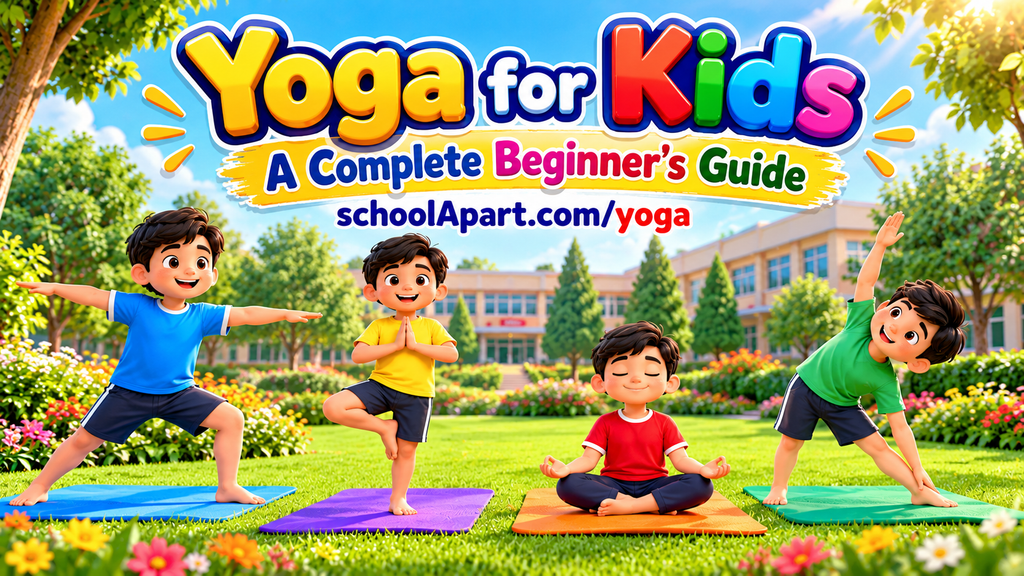
For a broader introduction to children’s yoga, visit our Yoga for Kids: A Complete Beginner’s Guide.
How Parents Can Help Children Practise Yoga
Parents can make children’s yoga more enjoyable by keeping activities simple and encouraging children to learn at their own pace.
Choose a Suitable Space
Use a flat, uncluttered area with enough room to move. A non-slip mat can help provide a stable surface.
Demonstrate Each Pose
Show children how to move into and out of a pose slowly. Use simple language and give them time to understand the instructions.
Offer Easier Variations
A child may find a pose difficult at first. Allow them to use a wall, chair, cushion, or simpler position when appropriate.
Keep Sessions Playful
Children may enjoy pretending to be a mountain, tree, cat, or butterfly. Playful descriptions can make learning more engaging without turning the activity into a competition.
Respect Their Comfort
Never force a child to continue a pose that feels uncomfortable. Encourage them to communicate when they want to stop or change activities.
Yoga Activities for School Students
Teachers and parents can adapt simple yoga poses for short movement breaks at school or at home.
For example:
- Standing activity: Practise Mountain Pose and notice a comfortable standing position.
- Balance activity: Try Tree Pose with wall support.
- Seated activity: Explore Butterfly Pose or a gentle seated stretch.
- Quiet finishing activity: End with a short period of relaxed sitting.
Choose activities according to the students’ ages, abilities, available space, and individual needs. Participation should be voluntary and free from pressure or embarrassment.
Yoga should complement other activities, including outdoor play, sports, and age-appropriate physical exercise.
Safety Tips for Kids’ Yoga
Safety is more important than completing a pose perfectly.
- Provide suitable supervision. Younger children should practise with a responsible adult.
- Avoid advanced poses. Beginners should not attempt difficult inversions or extreme stretches without appropriate specialist instruction.
- Never force flexibility. Children should move only within a comfortable range.
- Use stable support. A wall or sturdy chair can help with standing balance.
- Keep breathing natural. Avoid forced breathing techniques and prolonged breath-holding.
- Stop when there is pain. Pain, dizziness, numbness, or unusual discomfort are reasons to stop immediately.
- Adapt activities. Not every pose is suitable for every child.
- Seek professional advice when needed. If a child has an injury, health concern, or physical limitation, consult an appropriate healthcare professional before beginning a new practice.
These precautions help keep yoga a positive and comfortable learning experience.
Common Mistakes to Avoid
Trying Too Many Poses at Once
Start with a few simple poses and introduce more activities gradually.
Forcing Children to Touch Their Toes
Touching the toes is not a requirement for a successful yoga session. Children should never force a forward bend.
Turning Balance into a Competition
Avoid comparing how long children can hold Tree Pose or how well they can balance. Support and easier variations are perfectly acceptable.
Ignoring Discomfort
A pose should not be painful. Stop and choose another activity if the child feels uncomfortable.
Expecting Immediate Results
Children learn at different rates. Focus on safe participation and enjoyment instead of expecting quick changes in flexibility or balance.
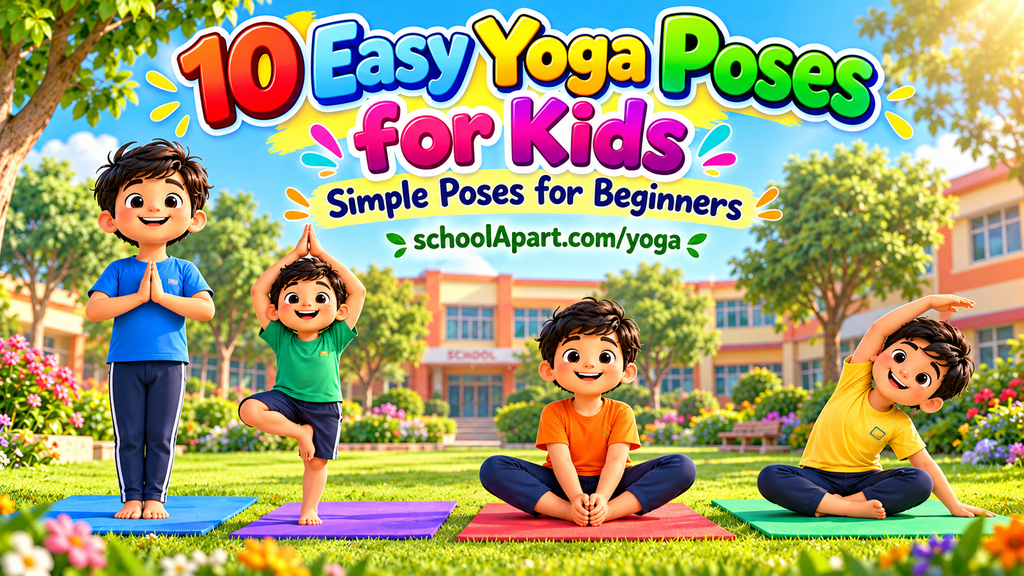
Easy yoga poses for kids can provide a simple introduction to movement, balance, flexibility, and relaxation. Mountain Pose, supported Tree Pose, Butterfly Pose, and other gentle activities can be adapted to suit many beginners.
Children do not need to master every pose or follow a complicated routine. Start with a few comfortable movements, provide suitable supervision, and let children learn at their own pace.
For more guidance on introducing yoga to children, explore our Yoga for Kids beginner’s guide and the SchoolApart Yoga learning hub.
Keep it simple. Move comfortably. Practise safely.
Frequently Asked Questions
1. What are the easiest yoga poses for kids?
Mountain Pose, supported Tree Pose, Butterfly Pose, and simple seated stretches can be good starting points when they feel comfortable. Choose poses according to the child’s age and abilities.
2. How many yoga poses should kids learn at first?
Start with two or three simple poses rather than trying to learn all 10 at once. Introduce more activities gradually as the child becomes familiar with the movements.
3. Can kids do yoga at home?
Yes. Children can explore simple yoga poses at home in a safe, uncluttered space. Younger children should have appropriate adult supervision.
4. How long should children practise yoga?
A short session of around five minutes can be a starting point. Adjust the length to the child’s age, interest, and comfort rather than following a strict time target.
5. Do kids need a yoga mat?
A yoga mat can provide a comfortable, stable surface, but it is not always essential. Choose a clean, flat, non-slip area that allows safe movement.
6. Can beginners try Tree Pose?
Yes, if it feels comfortable and is practised safely. Beginners can keep the raised foot near the standing ankle and use a wall or sturdy chair for support.
7. Should children stretch until they feel pain?
No. Children should never force a stretch or continue a pose that causes pain. Stop the movement and choose a comfortable alternative.
8. Can yoga replace sports or outdoor play?
No. Yoga can complement other activities, but children also need suitable active play, sports or other movement, rest, and a balanced daily routine.
9. Are all yoga poses suitable for every child?
No. A pose may not suit every child’s age, ability, or physical needs. Use suitable modifications and seek professional guidance when a child has an injury or health concern.
10. Can teachers use easy yoga poses in school?
Teachers can introduce simple, age-appropriate yoga activities when there is suitable space and supervision. Activities should be comfortable, inclusive, and free from pressure or competition.

Leave a Reply