

Learn what yoga is, its basic principles, beginner-friendly poses, benefits, and safety tips for kids and school students starting yoga.
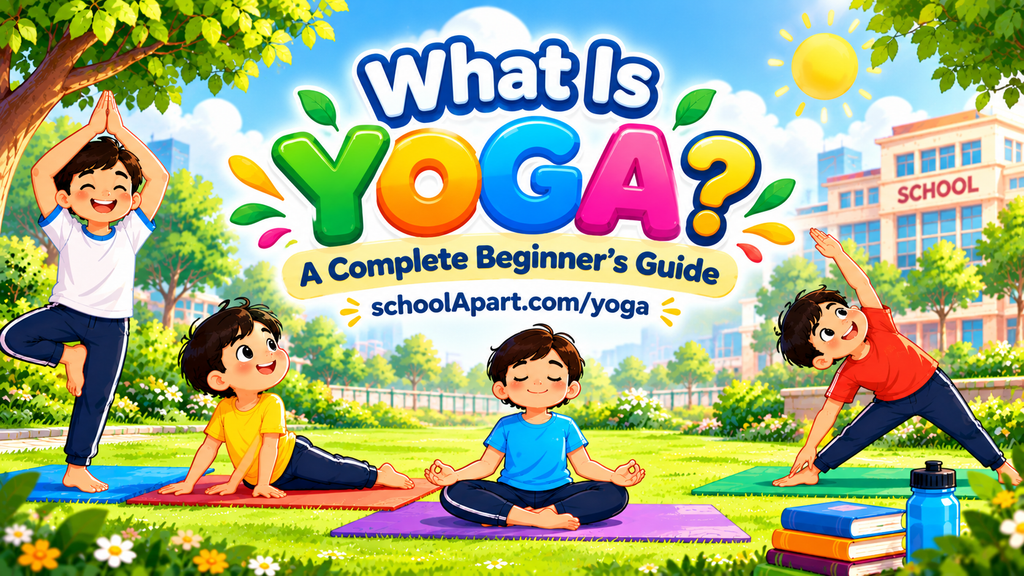
What Is Yoga? A Complete Beginner’s Guide
Have you ever wondered what yoga is and why so many people practise it? Yoga is a form of practice that combines physical postures, controlled movement, breathing, and attention to the present moment. It can help people develop body awareness, practise balance and flexibility, and make time for relaxation.
For kids and school students, yoga can be a simple way to explore movement and build healthy habits. You do not need to be flexible, perform difficult poses, or have previous experience to begin.
In this complete beginner’s guide, you will learn what yoga means, where it comes from, how it works, its potential benefits, and how children and students can start practising safely.
What Is Yoga?
Yoga is a practice that brings together physical postures, movement, breathing techniques, and focused attention. Different yoga styles place different levels of emphasis on these elements.
Some yoga sessions focus mainly on gentle stretches and simple poses. Others include balance activities, flowing movements, breathing exercises, or relaxation.
The word yoga comes from Sanskrit, an ancient language of India. Yoga developed in India over many centuries and has a long history of philosophical and practical traditions.
Today, people practise many forms of yoga for movement, flexibility, body awareness, relaxation, and personal well-being.
For beginners, the most important thing to understand is that yoga is not a competition. You do not need to copy every movement perfectly. The goal is to practise comfortably, follow suitable instructions, and learn gradually.
What Are the Main Elements of Yoga?
Yoga can include several elements. Understanding them makes it easier for beginners to know what happens during a yoga session.
1. Yoga Poses
Yoga poses are body positions that people practise while standing, sitting, balancing, or stretching.
For example, a standing pose may encourage you to notice your posture, while a simple balance pose helps you practise controlling your movements.
Beginners should start with easy poses and avoid forcing their bodies into unfamiliar positions.
2. Breathing
Breathing is an important part of many yoga practices. Some sessions encourage people to notice their natural breathing or breathe slowly and comfortably.
Children and beginners should never force their breathing, hold their breath for long periods, or continue a breathing exercise if they feel dizzy or uncomfortable.
3. Focus and Attention
Yoga often encourages people to pay attention to their movements, breathing, and body position.
For students, this can provide an opportunity to take a calm movement break during a busy day. However, yoga should not be presented as a guaranteed way to improve academic performance or solve concentration difficulties.
4. Relaxation
Some yoga sessions finish with a short period of quiet rest. This gives participants time to settle down after moving.
Relaxation can be a useful part of a balanced routine, alongside sleep, outdoor play, regular physical activity, and time with family and friends.
A Brief History of Yoga
Yoga originated in India and has a long history connected with philosophical, spiritual, and physical traditions.
Over time, different yoga practices and schools developed. Some traditions place greater emphasis on meditation and philosophy, while others focus more on physical postures, breathing, or movement.
Modern yoga includes many approaches. Some classes are designed around physical exercise and gentle stretching, while others include a broader range of traditional practices.
Understanding this history helps beginners recognise that yoga is more than a collection of stretching exercises. At the same time, people can learn its basic movements without needing to study every part of its history before starting.
What Are the Benefits of Yoga for Kids and Students?
Age-appropriate yoga can introduce children and school students to useful movement and self-care habits. Its effects vary from person to person, and no single activity guarantees the same results for everyone.
1. Practising Balance
Some yoga poses require participants to maintain a comfortable position while standing or shifting their weight.
With suitable guidance, these activities can give children opportunities to practise balance and body control.
2. Exploring Flexibility
Gentle yoga movements allow students to explore how their bodies move.
Children should stretch only within a comfortable range. They should never force a joint or try to achieve the same flexibility as another person.
3. Developing Body Awareness
Yoga encourages learners to notice their posture, movements, and physical comfort.
This awareness can help children understand when a position feels comfortable and when they need to adjust or stop.
4. Making Time for Relaxation
Gentle movement and quiet breathing can provide a short break from everyday activities.
Students may enjoy including a brief yoga session in their routine when they need a change from sitting or studying.
5. Building Healthy Habits
A short, enjoyable practice can help children become more familiar with regular movement.
Yoga works best as one part of a balanced lifestyle that also includes active play, sports or other physical activities, enough sleep, and nutritious food.
6. Encouraging Patience
Some poses take practice to learn. Beginners can gradually become more familiar with the movements without rushing.
Children should be encouraged to learn at their own pace rather than compete with classmates or attempt difficult poses to impress others.
Is Yoga Suitable for Beginners?
Yes. Many yoga activities can be adapted for beginners, including children and school students.
You do not need special flexibility, advanced skills, or expensive equipment to begin learning simple poses.
A beginner can start with:
- A safe, uncluttered space.
- Comfortable clothing.
- A few easy standing or sitting poses.
- Gentle, natural breathing.
- Clear instructions from a reliable source or qualified instructor.
- Appropriate adult supervision for younger children.
The most important rule is to choose activities that match your age, ability, and comfort level.
If you have an injury, a health concern, or a physical limitation, seek appropriate professional guidance before beginning a new practice.
5 Easy Yoga Poses Beginners Can Learn
The following poses are examples of beginner-friendly movements. Not every pose is suitable for every child, so choose activities carefully and use appropriate supervision.
1. Mountain Pose
Mountain Pose is a basic standing position.
How to practise:
- Stand on a stable surface with your feet comfortably placed.
- Keep your body upright without stiffening your knees.
- Let your arms rest naturally by your sides.
- Look forward and breathe normally.
- Hold the position briefly if it feels comfortable.
This pose helps beginners practise standing posture and body awareness.
2. Tree Pose
Tree Pose is a standing balance pose. Beginners can use a wall or a sturdy support to help maintain balance.
How to practise:
- Stand upright with both feet on the floor.
- Shift your weight gently onto one foot.
- Place the other foot against the inside of the standing ankle or lower leg.
- Do not press your foot against your knee.
- Use a wall or chair for support if needed.
- Return both feet to the floor and repeat on the other side if comfortable.
It is completely fine to keep the toes of the raised foot on the floor while learning.
3. Butterfly Pose
Butterfly Pose is a seated position often used for gentle movement around the hips.
How to practise:
- Sit on the floor with your back comfortably upright.
- Bring the soles of your feet together.
- Let your knees move outward naturally.
- Hold your feet or ankles gently.
- Stay in the position without pushing your knees down.
Stop if you feel pain or discomfort. Do not force your legs into a wider position.
4. Cat-Cow Movement
Cat-Cow is a gentle movement that can be practised on hands and knees.
How to practise:
- Start on your hands and knees on a comfortable surface.
- Keep your hands under your shoulders and knees under your hips.
- Gently round your back.
- Slowly return towards a comfortable, slightly arched position.
- Move smoothly and avoid pushing your back to its limit.
Keep the movement small and comfortable. If kneeling hurts, choose a different activity.
5. Child’s Pose
Child’s Pose is a resting position used in some yoga practices.
How to practise:
- Begin kneeling on a comfortable surface.
- Move your hips gently towards your heels, only as far as comfortable.
- Lean forward and rest your hands in front of you.
- Support your head or upper body with a cushion if needed.
- Breathe naturally and come out of the pose slowly.
If the position causes discomfort in your knees, hips, back, or ankles, stop and choose another resting position.
For more child-friendly pose instructions, explore the SchoolApart Yoga learning hub.
How Can School Students Start Practising Yoga?
Students do not need a complicated routine to get started. A simple, supervised session is often a practical first step.
Step 1: Choose a Safe Space
Find a flat, uncluttered area with enough room to move. Make sure the floor is not slippery.
Step 2: Wear Comfortable Clothes
Choose clothes that allow you to move freely without catching on nearby objects.
Step 3: Begin with Easy Movements
Start with a few basic standing or sitting poses. Leave advanced balances and difficult stretches for appropriately guided learning.
Step 4: Breathe Naturally
Keep breathing comfortably while practising. Never force your breath or continue an exercise that makes you feel unwell.
Step 5: Move at Your Own Pace
Every learner has different abilities. Do not compare your flexibility, balance, or progress with someone else’s.
Step 6: Stop When Something Feels Wrong
Pain is not a sign that a pose is working. Stop if you experience pain, dizziness, numbness, or unusual discomfort, and tell a responsible adult if you need help.
Younger children should practise with suitable adult supervision.
A Simple 5-Minute Yoga Routine for Beginners
Here is an example of a short introductory routine for students. It is a general guide, not a requirement to complete every movement.
| Time | Activity |
|---|---|
| 1 minute | Stand comfortably and notice your natural breathing |
| 1 minute | Practise Mountain Pose |
| 1 minute | Try a supported Tree Pose, or simply practise standing balance |
| 1 minute | Practise Butterfly Pose if comfortable |
| 1 minute | Finish with a comfortable seated rest |
Move slowly and take breaks whenever needed. You can skip any activity that does not suit your body or ability.
Young children should have adult supervision, and the routine should be adapted to their age and needs.
Common Yoga Mistakes Beginners Should Avoid
Learning yoga safely is more important than learning many poses quickly.
Trying Difficult Poses Too Soon
Advanced poses can require skills, strength, balance, and guidance. Beginners should start with simpler activities.
Forcing Stretches
Do not push your body to achieve a particular shape. Comfortable movement is more important than reaching a deep stretch.
Holding Your Breath
Breathe naturally during simple poses. Stop any breathing activity that causes dizziness or discomfort.
Copying Others Without Considering Your Own Ability
A pose that is comfortable for one person may not be suitable for another. Use modifications and supports when appropriate.
Treating Yoga as a Competition
Yoga is a personal practice. Children should not be judged on how flexible they are or how long they can hold a position.
Ignoring Pain
Stop if you experience pain or unusual discomfort. Tell a responsible adult and seek professional advice when appropriate.
Yoga at Home, School, or in a Class
Beginners can learn yoga in different settings, depending on their needs and available guidance.
Yoga at home: A quiet space and clear beginner instructions can help students explore simple movements with adult supervision when appropriate.
Yoga at school: A teacher or suitably qualified instructor can introduce age-appropriate activities in a structured setting.
Yoga in a class: An instructor can demonstrate poses, offer suitable modifications, and help participants understand safe movement.
Whichever setting you choose, the focus should remain on safe practice, gradual learning, and activities suited to each student’s age and ability.
How Often Should Beginners Practise Yoga?
There is no single schedule that suits every beginner.
Some students may enjoy a short session occasionally, while others may prefer to include simple movements in their regular routine. Start with a comfortable amount of practice and adjust according to age, ability, and guidance.
Consistency is more useful than rushing into long sessions or difficult poses. Yoga should complement, not replace, outdoor play, sports, and other forms of physical activity.
Yoga is a practice that can combine movement, physical postures, breathing, and focused attention. For children and school students, age-appropriate yoga can offer opportunities to practise balance, explore flexibility, develop body awareness, and make time for relaxation.
You do not need to master difficult poses to begin. Start with simple movements, follow reliable instructions, and respect your body’s limits.
Remember that yoga is not a competition. Learn at your own pace, practise safely, and choose activities that suit your needs.
Ready to explore more? Visit the SchoolApart Yoga learning hub for beginner-friendly guidance on yoga for kids and students.
Learn step by step. Practise safely. Build healthy habits.
Frequently Asked Questions About Yoga
1. What is yoga in simple words?
Yoga is a practice that can combine physical poses, gentle movement, breathing, and focused attention. Beginners can start with simple activities suited to their age and ability.
2. Can kids and school students learn yoga?
Yes. Children and school students can explore age-appropriate yoga activities with suitable guidance and supervision. The poses should match their abilities and comfort levels.
3. Do I need to be flexible to start yoga?
No. You do not need to be flexible to begin. Start with easy movements, use suitable modifications, and never force a stretch.
4. What should beginners learn first in yoga?
Beginners can start by learning basic movement and breathing awareness, followed by simple standing and sitting poses. Difficult poses are not necessary at the beginning.
5. How long should a beginner practise yoga?
Beginners can start with a short session, such as five minutes, and adjust according to their age, ability, and comfort. There is no need to rush into longer sessions.
6. Can students practise yoga at home?
Yes. Students can practise simple yoga activities in a safe space by following reliable instructions. Younger children should have appropriate adult supervision.
7. Is yoga a replacement for sports or exercise?
No. Yoga can complement other physical activities, but it should not replace active play, sports, or other forms of movement that are appropriate for the student.
8. What should I do if a yoga pose hurts?
Stop the pose immediately and do not force the movement. Tell a responsible adult if you are a child or student, and seek appropriate professional guidance if needed.
Leave a Reply