
What is illustration? Learn the meaning, types, uses, styles, skills, and beginner-friendly ways to start learning illustration step by step.
What Is Illustration? A Beginner’s Guide
Illustration is a form of visual art used to explain, communicate, decorate, or tell an idea through images.
You see illustrations in many places—books, magazines, websites, advertisements, children’s stories, educational materials, posters, games, packaging, and digital media.
An illustration can be a simple drawing or a highly detailed digital artwork. It can represent a real object, explain an idea, show a character, or help tell a story.
For beginners, understanding what illustration means is an important first step before learning illustration techniques, character design, digital illustration, or visual storytelling.
This guide explains what illustration is, how it works, where it is used, how it differs from drawing and painting, and how beginners can start learning it.
What Is Illustration?
Illustration is artwork created to visually represent, explain, support, or communicate an idea, subject, story, or message.
The word illustration can refer to both the artwork itself and the process of creating that artwork.
For example, imagine a children’s story about a rabbit exploring a forest.
A drawing of the rabbit standing in the forest could be an illustration because it helps the reader visualize the story.
Similarly, an image showing the parts of a plant in a school textbook can be an illustration because it helps explain information.
So illustration is not limited to one particular drawing style.
It is mainly about using visual art to communicate something.
What Is an Illustration Used For?
Illustrations can serve many different purposes.
1. Storytelling
Illustrations can help communicate events, characters, places, and emotions in a story.
Examples include:
- Children’s books
- Storybooks
- Comics
- Graphic novels
- Educational stories
2. Education
Illustrations can make complicated information easier to understand.
For example:
- Science diagrams
- Educational books
- School worksheets
- Maps
- Instructional images
3. Communication
An illustration can communicate an idea without using a lot of written explanation.
4. Decoration
Some illustrations are created mainly to make a page, product, poster, or publication visually attractive.
5. Entertainment
Illustration is widely used in:
- Games
- Animation development
- Comics
- Character concepts
- Posters
- Entertainment media
Where Do We See Illustrations?
You probably encounter illustrations every day without thinking about them as illustrations.
They can appear in:
- Books
- School textbooks
- Children’s magazines
- Websites
- Mobile applications
- Advertisements
- Posters
- Product packaging
- Newspapers
- Comics
- Games
- Social media
- Educational resources
This makes illustration one of the most widely used forms of visual communication.
Illustration vs Drawing
Illustration and drawing are closely connected, but they are not exactly the same thing.
Drawing
Drawing is the process of creating an image using lines, shapes, marks, values, and other visual elements.
A drawing can be:
- A practice sketch
- A portrait
- A still life
- A landscape
- A study of an object
It does not necessarily need to communicate a specific story or message.
Illustration
Illustration generally has a communication purpose.
It may explain an idea, support a story, represent a concept, or communicate information.
Simple example
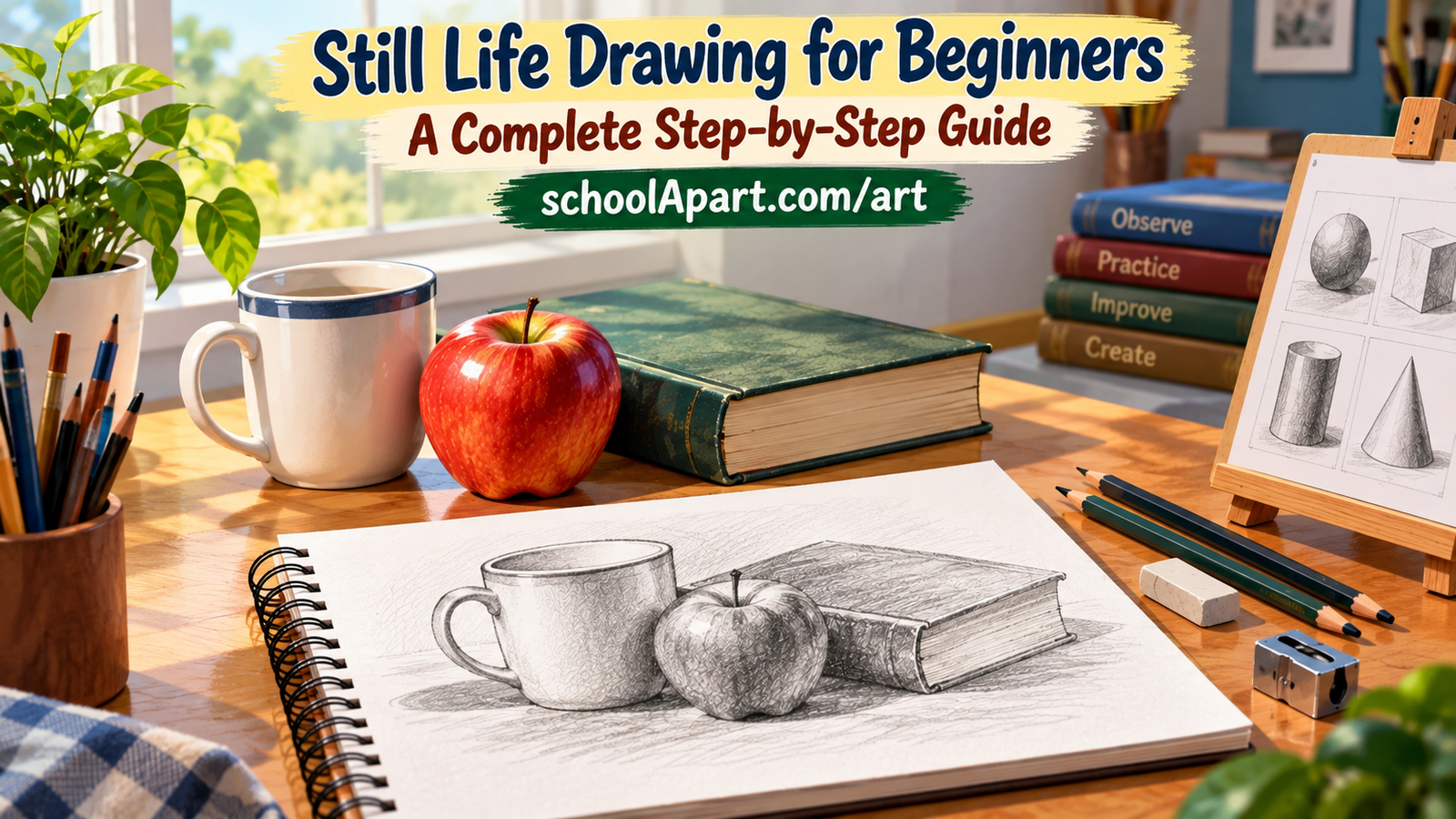
If you draw an apple simply to practice its shape, it is a drawing.
If you create an image of an apple for a children’s story, educational page, poster, or visual explanation, it may function as an illustration.
The difference is therefore not simply the drawing technique. Purpose and context matter.
Illustration vs Painting
Illustration and painting can also overlap.
A painting can be created as an illustration, and an illustration can be created using painting techniques.
Watercolor Painting for Beginners: A Complete Step-by-Step Guide
Painting
Painting generally focuses on applying pigments or digital equivalents to create an artwork.
Illustration
Illustration focuses more strongly on visual communication or representation of an idea.
For example, a watercolor landscape created as an independent artwork is a painting.
A watercolor scene created specifically to accompany a story may function as an illustration.
So the two categories can overlap.
Illustration vs Fine Art
Fine art is often created primarily as an artistic expression, exploration, or experience.
Illustration is generally created to serve a visual communication purpose.
However, the boundary is not always strict.
An illustrator can create highly artistic work, while a fine artist may create work that communicates a specific idea.
The purpose, context, and intended use of the artwork help determine how it is understood.
What Are the Main Types of Illustration?
Illustration can take many forms.
There is no single style that defines all illustrations.
1. Editorial Illustration
Editorial illustrations are created to support articles, essays, news stories, or other written content.
They often represent an idea rather than simply showing a literal scene.
2. Children’s Book Illustration
These illustrations help bring stories and characters to life for young readers.
They may include:
- Animals
- Children
- Fantasy characters
- Nature
- Story scenes
3. Educational Illustration
Educational illustrations help explain information.
Examples include:
- Science illustrations
- Historical illustrations
- Diagrams
- Instructional drawings
- Educational charts
4. Character Illustration
Character illustration focuses on creating visual representations of people, animals, creatures, or fictional characters.
It is closely connected to:
- Cartoon art
- Comic art
- Animation
- Game art
- Storytelling
5. Technical Illustration
Technical illustrations are designed to explain how something looks or works.
Examples include illustrations of:
- Machines
- Tools
- Products
- Mechanical parts
- Processes
Accuracy is often especially important in this type of illustration.
6. Scientific Illustration
Scientific illustration communicates information about scientific subjects.
It may be used for:
- Plants
- Animals
- Anatomy
- Biology
- Geology
- Scientific structures
7. Advertising Illustration
Illustrations can be used in advertisements and promotional materials to attract attention or communicate an idea.
8. Concept Illustration
Concept illustrations are used to visually explore an idea, design, character, environment, or imaginary concept.
They can be useful in areas such as:
- Games
- Animation
- Film
- Product development
- Storytelling
9. Digital Illustration
Digital illustration is created using digital tools such as a computer, tablet, or other electronic device. Digital illustration can imitate traditional media or use entirely digital techniques.
What Is Painterly Digital Art? A Complete Beginner’s Guide with Examples
Traditional vs Digital Illustration
Illustrations can be created using traditional materials or digital tools.
Traditional Illustration
Common materials include:
- Graphite pencils
- Colored pencils
- Ink
- Watercolor
- Acrylic paint
- Markers
- Pastels
Digital Illustration
Digital illustrators may use:
- Drawing tablets
- Styluses
- Computers
- Tablets
- Digital drawing applications
Neither method is automatically better.
They simply provide different ways of creating and editing artwork.
What Skills Does an Illustrator Need?
You do not need to master everything at once.
Beginners can gradually develop several skills.
Drawing Skills
Understanding:
- Lines
- Shapes
- Forms
- Proportion
- Perspective
provides a useful foundation.
Observation
You need to understand how objects, people, environments, and details appear visually.
Composition
Composition is the arrangement of visual elements within an artwork.
Color
Understanding color helps you create effective and visually clear illustrations.
Colour Theory Explained: A Complete Beginner’s Guide to Understanding Colors
Light and Shadow
Values can help create depth and make illustrations easier to understand.
Visual Storytelling
Illustrators often need to communicate an idea or story through images.
Creativity
Illustration frequently requires transforming an idea into a visual form.
Do You Need to Be Good at Drawing to Learn Illustration?
Not necessarily.
Drawing skills are very useful, but illustration is broader than simply drawing accurately.
A beginner can start with:
- Simple shapes
- Basic objects
- Simple characters
- Simple scenes
- Basic color combinations
As drawing skills improve, more complex illustrations can be created.
The important thing is to learn progressively.
How to Start Learning Illustration
If you are completely new to illustration, follow a simple learning path.
Step 1: Learn Basic Drawing
Start with:
- Lines
- Basic shapes
- Simple forms
- Proportion
Your existing drawing practice can provide this foundation.
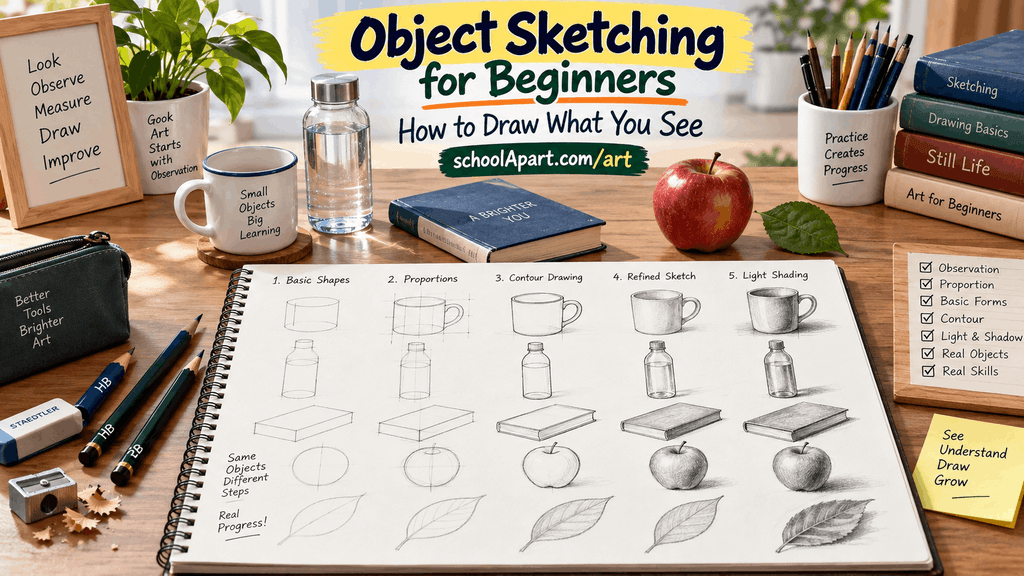
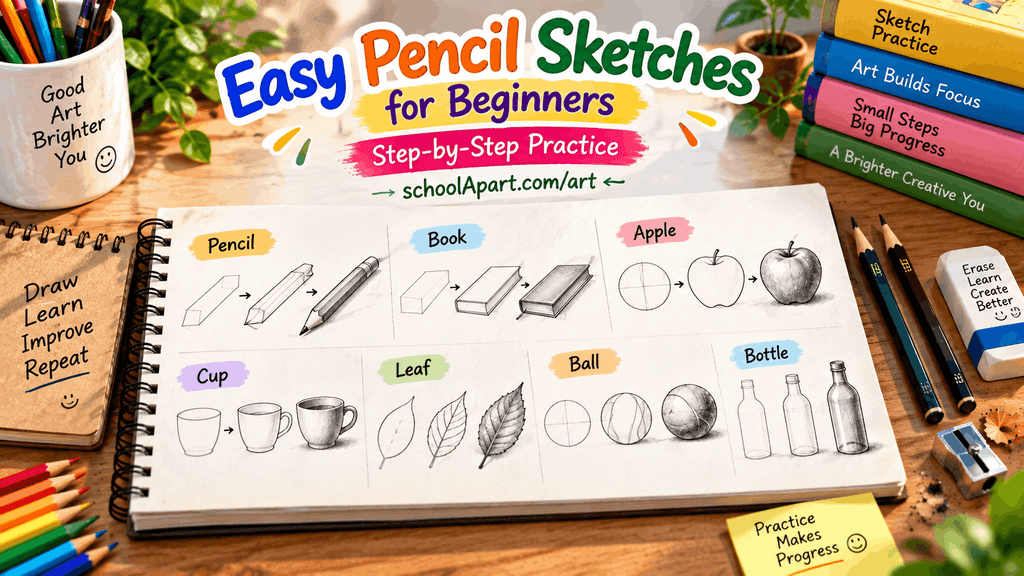
Step 2: Practice Simple Objects
Draw everyday objects and observe their shapes.
This improves your ability to represent real subjects.
Step 3: Learn Basic Composition
Learn how to arrange objects and subjects inside a page.
This becomes especially important when creating complete illustrations.
Step 4: Explore Color
Learn basic color relationships and experiment with different combinations.
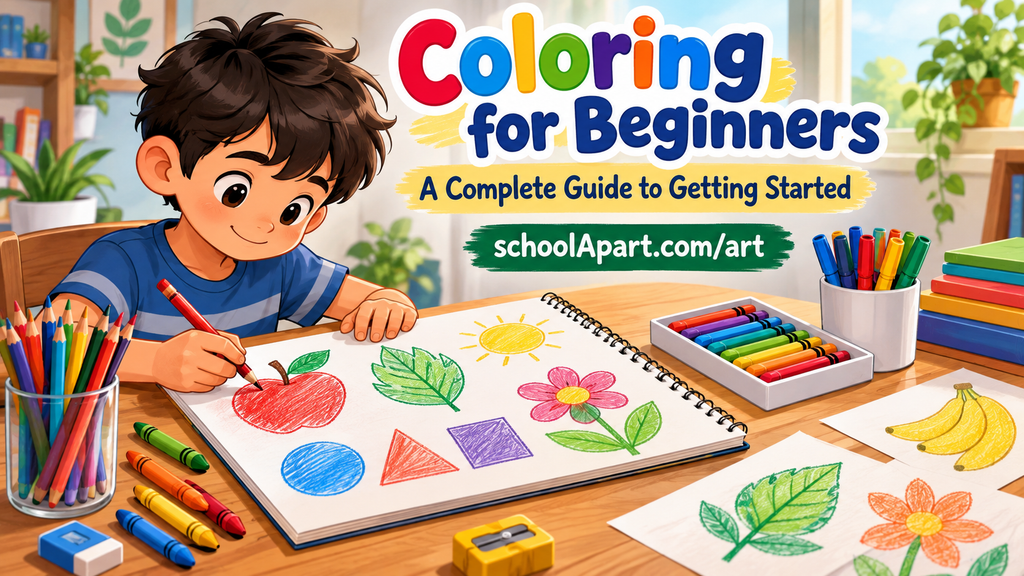
Your Colour Theory Explained and Coloring for Beginners articles can provide a useful starting point.
Step 5: Try Simple Visual Stories
Create a small scene that communicates an idea.
For example:
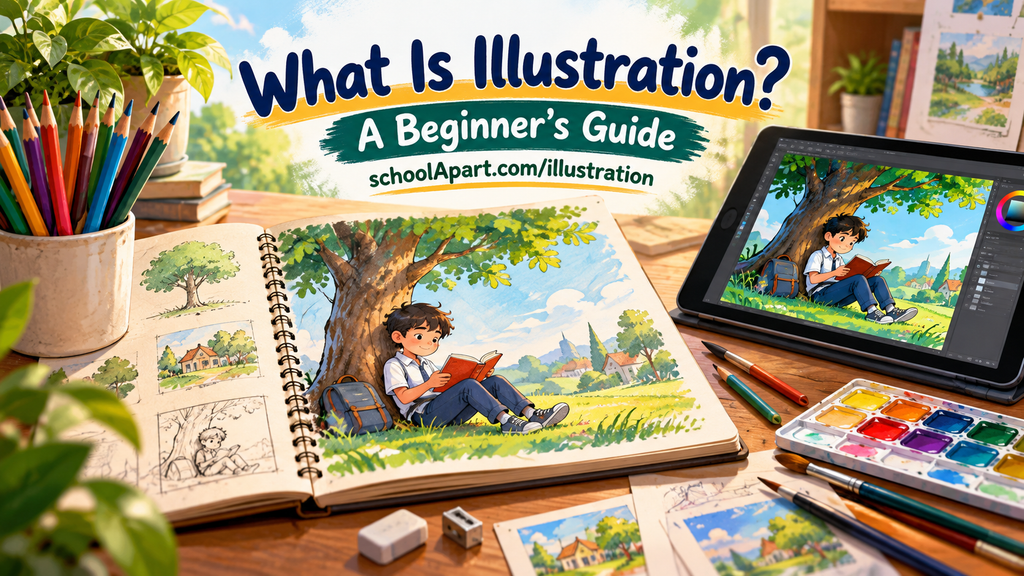
A student reading a book under a tree.
Instead of simply drawing separate objects, think about how the entire image communicates the scene.
Step 6: Experiment With Different Styles
Try:
- Simple cartoon style
- Line illustration
- Colored pencil illustration
- Watercolor illustration
- Digital illustration
You do not need to choose a permanent style immediately.
A Simple Illustration Exercise for Beginners
Try this beginner exercise.
Theme
A child reading a book under a tree
Step 1
Draw a simple tree using basic shapes.
Step 2
Add a simple character.
Step 3
Add the book.
Step 4
Create a ground area.
Step 5
Add a few background elements.
Step 6
Choose a small color palette.
Step 7
Add light and shadow.
Step 8
Look at the completed image and ask:
Does the image clearly communicate the idea?
This final question is important because illustration is not only about drawing individual objects. It is about creating a visual message.
Common Illustration Styles Beginners Can Explore
There are many possible styles.
For example:
- Line illustration
- Flat illustration
- Cartoon illustration
- Watercolor illustration
- Pencil illustration
- Digital painting
- Minimal illustration
- Children’s illustration
- Comic-style illustration
- Decorative illustration
You do not need to learn all of them.
Try different approaches and discover which ones you enjoy.
Illustration and Cartoon Art
Cartoon art and illustration can overlap.
A cartoon character can be used as part of an illustration.
For example, a cartoon character standing in a classroom scene can become an illustration if the complete image is created to communicate a story or idea.
This is why Cartoon & Comic Art and Illustration can have some connections while still serving different purposes.
Illustration and Digital Art
Digital illustration is one of the major areas of modern illustration.
A digital illustration can be created from scratch using a drawing application or developed from a scanned traditional sketch.
It can involve:
- Digital sketching
- Digital coloring
- Digital painting
- Character design
- Background design
- Visual storytelling
SchoolApart already has a Digital Art for Beginners guide, which can be useful for learners interested in exploring this direction.
Common Mistakes Beginners Make
1. Focusing only on drawing technique
A technically good drawing may not communicate the intended idea clearly.
Solution: Think about the purpose of the illustration.
2. Adding too many details
Too much detail can make an illustration visually confusing.
Solution: Focus on the important visual elements.
3. Ignoring composition
Even good individual drawings can create a weak overall image if they are poorly arranged.
Solution: Plan the composition before adding details.
4. Using too many colors
A large number of unrelated colors can reduce visual clarity.
Solution: Start with a limited palette.
5. Copying a style without understanding it
Studying other artists can be useful, but beginners should also experiment and develop their own visual decisions.
6. Trying to create highly detailed illustrations immediately
Complex illustrations require many skills.
Solution: Start with simple subjects and gradually increase complexity.
Illustration Practice Ideas for Beginners
Try creating simple illustrations based on:
- A student reading
- A rainy day
- A school classroom
- A garden
- A pet
- A picnic
- A simple story scene
- A favorite object
- A school project
- A seasonal scene
The goal is not to create a masterpiece.
The goal is to learn how to turn an idea into an image.
How Illustration Can Help School Students
Learning illustration can help students develop:
- Creativity
- Visual communication
- Observation
- Imagination
- Drawing confidence
- Composition skills
- Storytelling ability
- Presentation skills
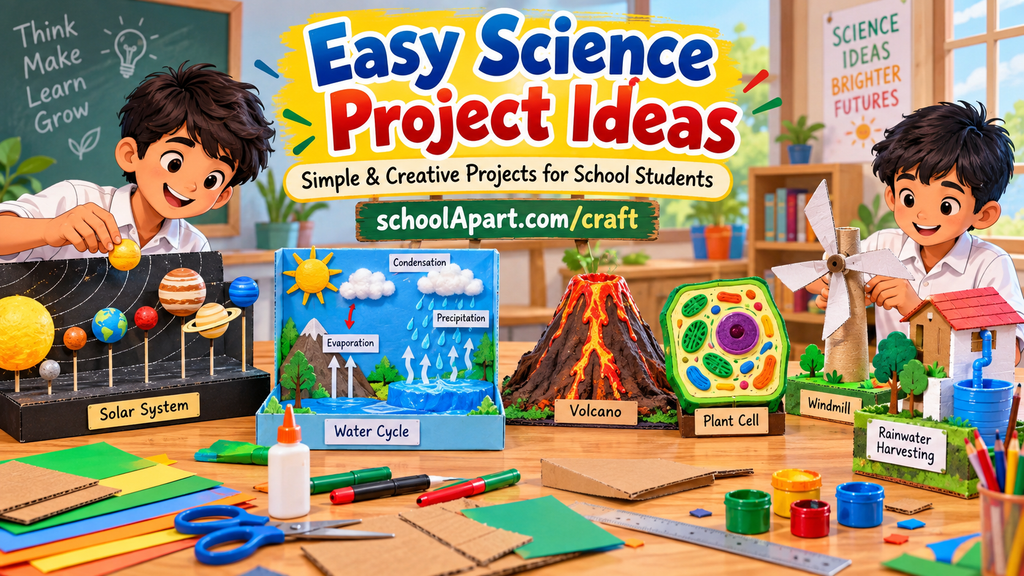
cience Project Craft Ideas for School Students: Simple & Creative Models
Illustration can also make school projects, presentations, posters, and creative assignments more visually engaging.
Key Takeaways
- Illustration is visual artwork created to communicate, explain, support, or represent an idea.
- Illustration and drawing are related but are not exactly the same.
- Purpose and context are important when distinguishing illustration from general drawing.
- Illustrations can be traditional or digital.
- Children’s books, education, advertising, comics, games, and websites all use illustration.
- Beginners can start with simple objects, characters, and scenes.
- Drawing, color, composition, observation, and storytelling are useful illustration skills.
- You do not need advanced drawing skills to begin learning illustration.
- Regular practice is more important than trying to create highly detailed artwork immediately.
Illustration is a broad and creative area of art that combines drawing, visual communication, composition, color, imagination, and storytelling.
You can find illustrations in books, educational materials, websites, advertisements, comics, games, and many other forms of media.
For beginners, the best way to start is not by trying to create complicated professional artwork. Begin with simple drawings, objects, characters, and scenes. Learn how to arrange visual elements and communicate a clear idea.
As your drawing and art skills improve, you can explore different illustration styles and eventually move into areas such as character illustration, story illustration, digital illustration, and visual storytelling.
Illustration is not just about making a picture look good. It is about using art to make an idea visible.
FAQ
1. What is illustration?
Illustration is visual artwork created to communicate, explain, support, or represent an idea, story, subject, or message.
2. What is an illustration?
An illustration is an image created to visually represent or communicate something.
3. What is illustration used for?
Illustration is used in books, education, advertising, websites, magazines, comics, games, packaging, and many other forms of visual communication.
4. What is the difference between drawing and illustration?
Drawing is the process of creating an image, while illustration generally has a communication or representational purpose.
5. Is illustration a type of drawing?
Illustration can use drawing as one of its main techniques, but illustration is broader than simply drawing.
6. What are the main types of illustration?
Common types include editorial, children’s book, educational, character, technical, scientific, advertising, concept, and digital illustration.
7. What is digital illustration?
Digital illustration is artwork created using digital tools such as computers, tablets, drawing applications, and styluses.
8. Can beginners learn illustration?
Yes. Beginners can start with simple objects, characters, scenes, and basic visual storytelling.
9. Do I need to be good at drawing to learn illustration?
Advanced drawing skills are not required to begin. However, improving drawing fundamentals can make illustration easier over time.
10. What skills are important for illustration?
Useful skills include drawing, observation, composition, color, light and shadow, creativity, and visual storytelling.
11. Is illustration the same as painting?
No. Painting is primarily a medium and artistic process, while illustration describes artwork created to communicate or represent an idea. A painting can also function as an illustration.
12. What is children’s book illustration?
Children’s book illustration is artwork created to support and visually communicate stories written for children.
13. What is character illustration?
Character illustration focuses on visually representing people, animals, creatures, or fictional characters.
14. What is educational illustration?
Educational illustration uses images to help explain concepts, information, processes, or subjects.
15. What is editorial illustration?
Editorial illustration is artwork created to support or visually represent an article, essay, opinion, or other written content.
16. Can cartoon art be illustration?
Yes. A cartoon can function as an illustration when it is created to communicate or support a story, idea, or message.
17. Can illustration be done with colored pencils?
Yes. Colored pencils can be used to create detailed traditional illustrations.
18. Can illustration be done digitally?
Yes. Digital illustration is widely used and can be created using drawing tablets, computers, tablets, and digital art applications.
19. How can I start learning illustration?
Start with drawing fundamentals, simple objects, composition, color, and small visual storytelling exercises.
20. What should a beginner illustrate first?
Simple objects, characters, school scenes, nature scenes, and short visual stories are good starting points.
Leave a Reply